

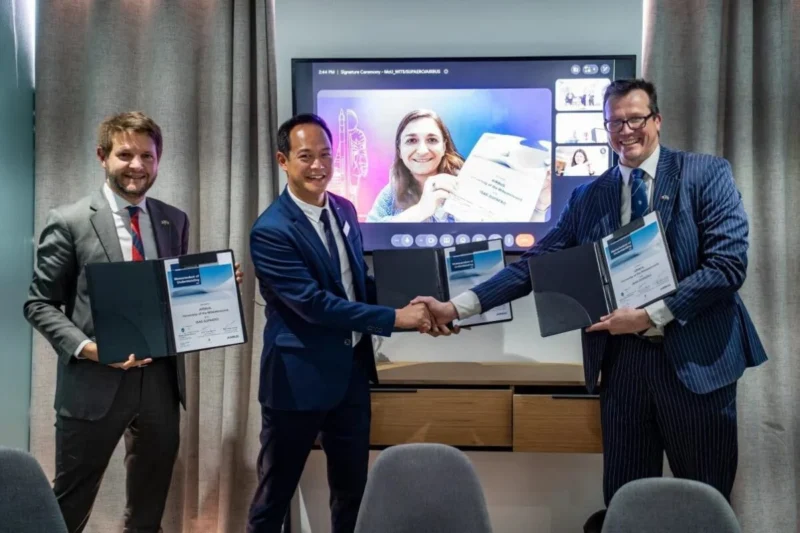
Airbus Southern Africa, the University of the Witwatersrand (Wits) in Johannesburg and France’s Institut Supérieur de l’Aéronautique et de l’Espace (ISAE-SUPAERO) signed a four-year Memorandum of Understanding (MoU) on 17 September 2026 to align South African aerospace engineering training with French standards.
The agreement targets a long-standing gap: too few locally trained engineers for an industry that Airbus, defence primes and their suppliers all need to staff. The signing was attended by Benjamin Cabouat, Deputy Head of Mission at the Embassy of France in South Africa, according to Wits.
What the Three Partners Agreed
Wits and ISAE-SUPAERO will map their aerospace engineering courses against each other and close the gaps they find. The two universities will also audit academic credits, so that French programmes meet South African qualification standards before any students move between them.
A reciprocal faculty exchange will connect Johannesburg with Toulouse, where ISAE-SUPAERO is based. Lecturers from each side will work together on aerospace design methods. The partners say this should lay the groundwork for regular student and staff exchanges.
Qualifying Wits students will gain a route into ISAE-SUPAERO’s specialised Master’s programmes and its advanced research facilities in France.
Airbus plays the industrial role. The company will run general aviation awareness events, offer design-thinking mentorship to Wits students and study whether to launch undergraduate aviation courses focused on aircraft operations. Airbus described the undergraduate courses as potential, not committed.
Each institution will field an operational team and an executive team. They will review progress at regular intervals through the four-year term.
Who Said What
Nam-Binh Hoang, Airbus Country Representative in South Africa, said the deal connects academic work with industry needs. “We are building a sustainable talent pipeline that supports both local innovation and global aerospace standards,” he said.
Professor Lynn Morris, Deputy Vice-Chancellor: Research and Innovation at Wits, said the agreement “enhances our capability to deliver world-class engineering education” and gives students access to advanced aerospace modules, international exposure and research tied to industry demand.
Marie-Hélène Baroux, President of ISAE-SUPAERO, said her institute was proud to “welcome top South African talent into our specialised Master’s programmes.” ISAE-SUPAERO describes itself as the world’s first dedicated aeronautical school, founded in 1909, and the University of Colorado Boulder signed its own MoU with the institute in July 2026.
Why a Skills Deal Matters to Defence Readers
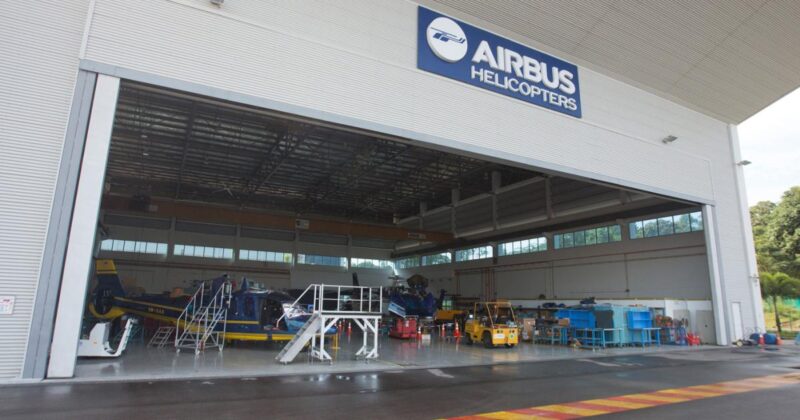
Aerospace programmes rise or fall on engineers. Design offices, maintenance hangars and test ranges all draw from the same small pool of graduates, and South Africa competes for them with Europe, the Gulf and North America. The South African Air Force feels that shortage directly: its helicopter fleet’s availability problems drove Airbus and Denel to sign a support pact at the Africa Aerospace and Defence (AAD) exhibition the same week.
Airbus has worked in South Africa for two decades. A 2014 industry report quoted an Airbus executive saying the company had committed R4 billion in work packages and research projects to the country since 2005.
The Wits deal does not build hardware. It builds the people who would design and certify it. French curricula are tied to European certification practice, so a Wits graduate who completes the pathway should arrive at an Airbus programme already trained in its methods.
The MoU is not a contract. Public statements set no budget, no student numbers and no funding source, and do not say who pays for travel, tuition or staff time.
Agreements of this kind are quick to sign and slow to deliver. Airbus signed a framework MoU with the government of Côte d’Ivoire in June 2018 to support that country’s aerospace sector, a comparable continental arrangement. The fairer test for Wits is what the partnership has produced by the end of its term in 2030, in graduates placed and exchanges completed.
A Second Airbus Training Deal in the Same Week
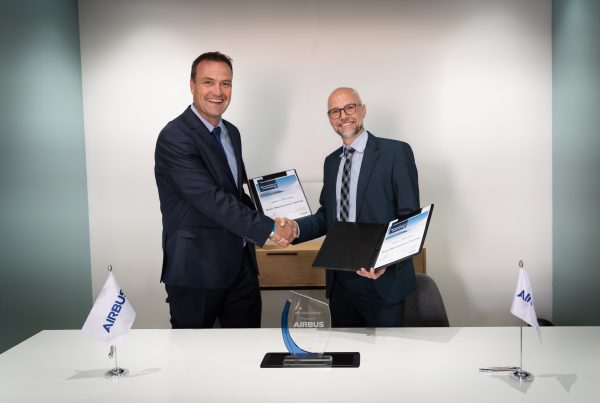
The Wits signing came a day after another Airbus training agreement at AAD 2026 at Air Force Base Waterkloof in the City of Tshwane. On 16 September 2026, Airbus and ALT Academy, a flight training provider based in Kempton Park, signed an MoU to explore joint aircraft maintenance training.
Ryan van Wijk, chief executive of ALT Academy, signed for his organisation. Timo Eckardt, head of customer support for Airbus Africa, signed for Airbus. The two sides will decide which courses and learning tools to develop together, with the aim of narrowing the distance between classroom teaching and what operators need in the hangar.
“This partnership is an important step in our commitment to building practical, high-quality maintenance training capacity in South Africa,” Van Wijk said. ALT Academy already teaches Airbus A320 and Boeing 737 simulator courses and has moved into early-stage, or “ab initio,” pilot training.
Maintenance is a defence concern as much as a civil one. Air forces that operate Airbus airframes, such as the Angolan C295 shown at AAD, depend on the same pool of licensed technicians that airlines recruit from.
Airbus is also expanding its African maintenance footprint beyond training. Mickaël Bertrand, Managing Director of Airbus Helicopters Morocco, told Morocco World News at the Marrakech Air Show that Airbus will open a helicopter maintenance, repair and overhaul (MRO) subsidiary in Morocco in the coming months. He said it will serve Morocco first and is designed to cover West Africa.
From Signed Paper to Students in Toulouse
The first test of the Wits agreement is the curriculum gap analysis, which should show how far the two programmes differ. The credit audit that follows will decide whether the first students can transfer.
Airbus has yet to say whether it will approve the undergraduate aviation courses. A decision on those, and the naming of the first Wits students bound for Toulouse, would show whether the MoU becomes a working programme.