
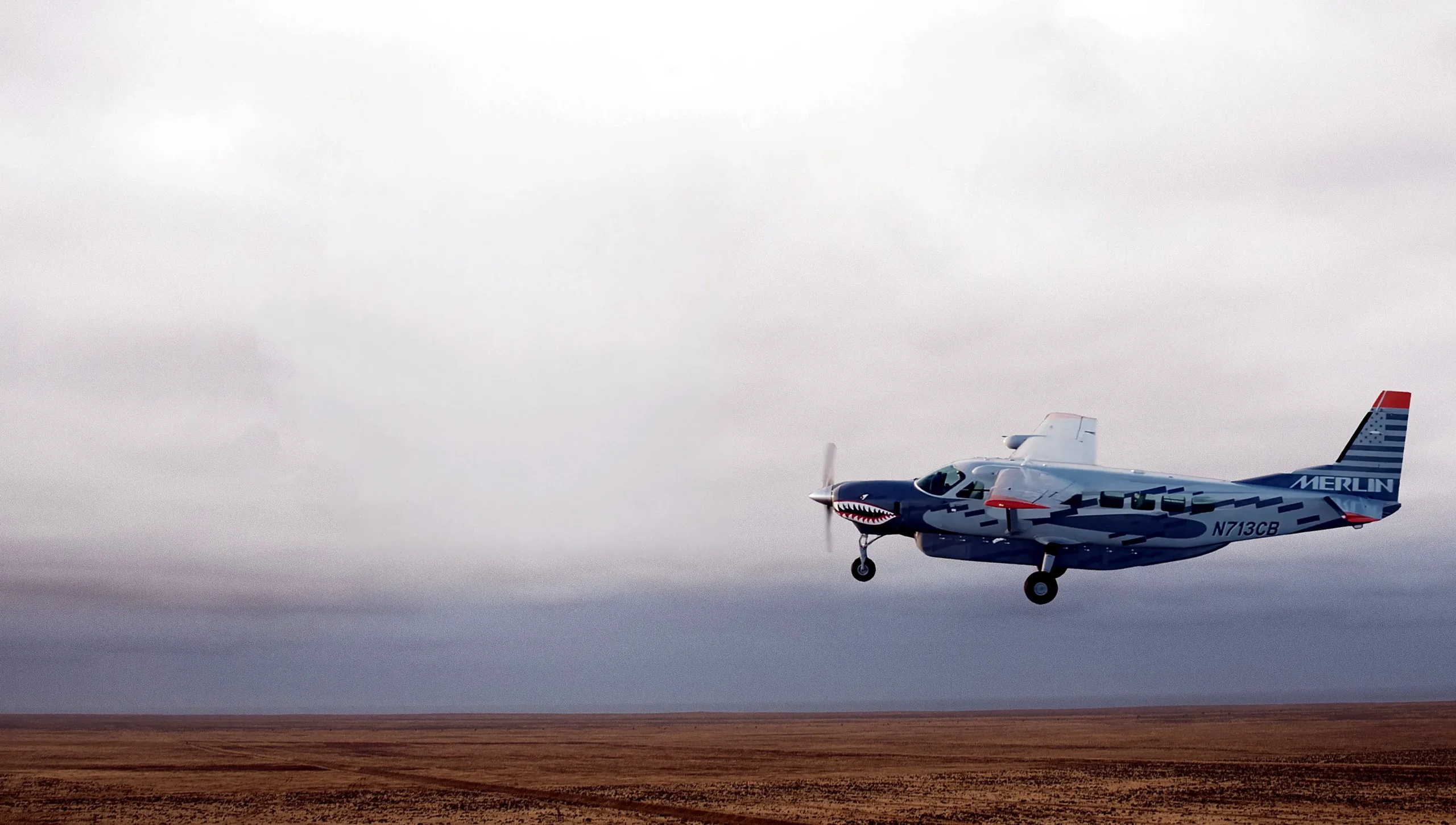
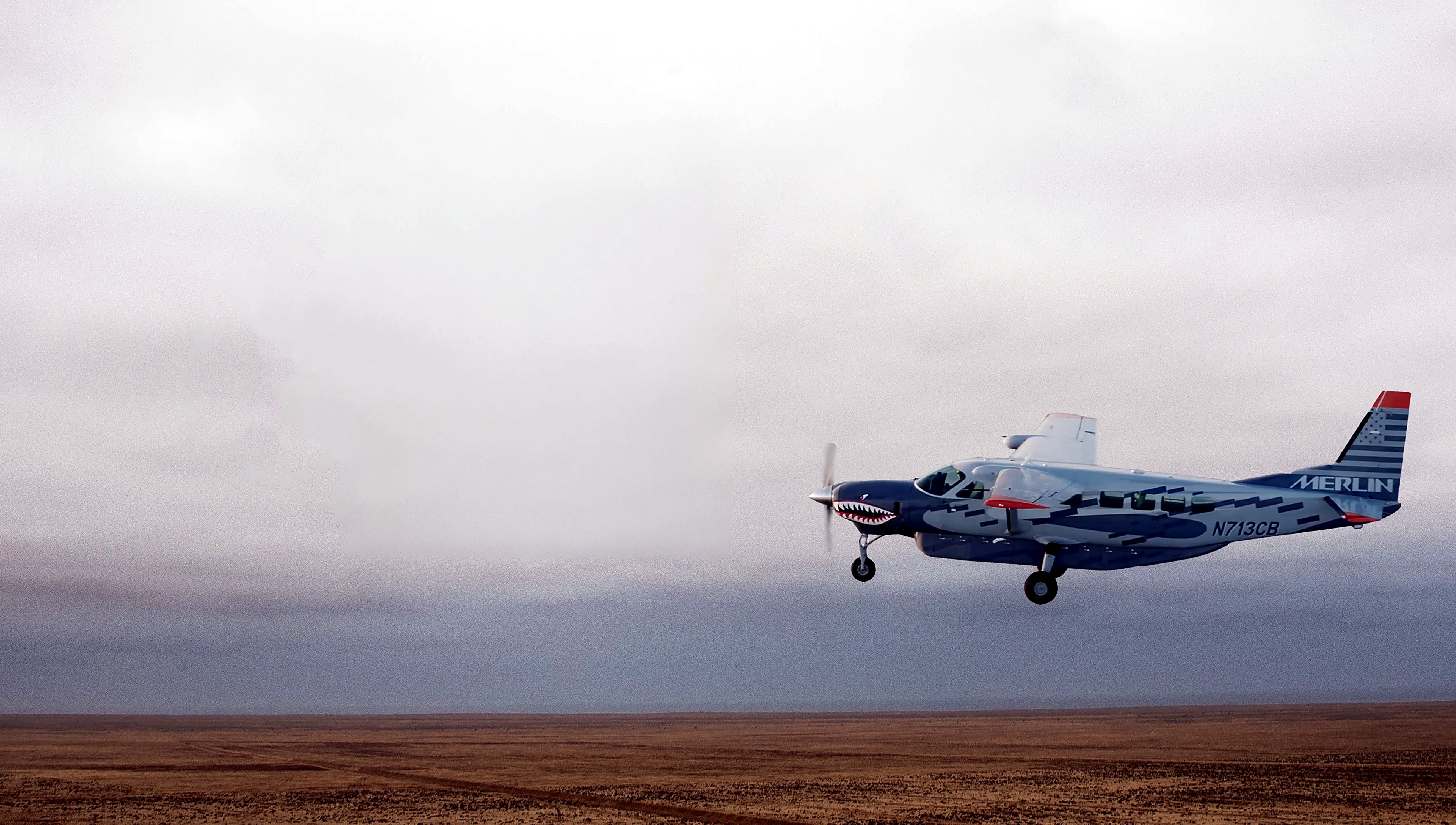
United States Africa Command (AFRICOM) will fly a Cessna 208B Grand Caravan with no pilot at the controls on a simulated casualty evacuation (CASEVAC) mission in Morocco in early US government fiscal year 2027, after awarding American autonomy developer Merlin a $500,000 contract, the company announced on 11 November 2026. The US fiscal year began on 1 October, so the trial is expected within the coming months.
The demonstration opens the initial phase of AFRICOM’s Autonomous CASEVAC Industry Technology Challenge, a competition looking for ways to move wounded troops and civilians to surgical care faster across a theatre where long distances, weak communications and security threats routinely delay evacuation.
A full mission flown by software
Merlin’s onboard autonomy system, Merlin Pilot, will run the whole sortie. According to the company, the mission covers initial tasking and flight planning, an autonomous departure, the en route flight to an austere casualty collection site, simulated patient loading, and an autonomous return flight and landing at the designated location.
The system is meant to manage navigation and contingency responses without a remote ground station or a flight crew. Merlin says it plans the best route from an operator’s tasking, replans around hazards in flight, talks to air traffic control using natural language processing, and keeps flying its authorised plan if the communications link is lost. That last feature is the core of the pitch. Remotely piloted aircraft need a persistent command-and-control link, which may not exist in remote or contested areas, while conventional evacuation puts a flight crew at risk.
“Casualty evacuation is ultimately about getting wounded noncombatants and service members to surgical care as quickly and safely as possible: a mission made more difficult by long distances and unreliable communications,” said Matt George, Merlin’s chief executive and founder. “Onboard autonomy could help overcome those constraints by accomplishing the CASEVAC mission from end to end, even when communications are disrupted.”
Why the Grand Caravan
The single-engine Grand Caravan is one of the most common utility aircraft on African airstrips and already flies with several African air forces and police air wings. For CASEVAC, Merlin points to its large cargo door and flat cabin floor, which allow stretchers to be loaded at ground level without rotor wash, winching or special equipment. The cabin will carry an air ambulance medical module with oxygen, electrical power and mounts for patient monitoring equipment.
Merlin has used its own Grand Caravan as an autonomy testbed for several years, and says Merlin Pilot has completed hundreds of autonomous flights across several fixed-wing types. The company sees a follow-on path to an operational fleet using a Beechcraft King Air variant, which would add twin-engine redundancy, more payload and room for several stretcher patients, medical equipment and an in-flight attendant. The same architecture, it says, could also carry cargo and personnel between dispersed operating locations.
The AFRICOM award is small. It comes a day after Merlin announced an $8.9 million task order from US Special Operations Command (USSOCOM) to move its C-130J autonomy programme from design into integration, part of a programme with an indefinite delivery, indefinite quantity (IDIQ) ceiling of more than $100 million.
The evacuation gap in AFRICOM’s theatre
AFRICOM’s area of responsibility covers 53 African states, and US personnel often work in small teams far from higher-level medical care. The weakness was exposed in October 2017, when four US soldiers were killed in an ambush near Tongo Tongo in Niger. As The War Zone recalls, the only immediate aerial evacuation support came from contractors flying from Niamey, more than 100 miles (160 kilometres) away.
Medical planners speak of a “golden hour” after serious injury, when the chances of survival are highest. African militaries face the same problem across the Sahel, the Lake Chad Basin, northern Mozambique and the Horn of Africa, where evacuation flights often depend on a handful of helicopters. An aircraft that can fly itself to a dirt strip and back without exposing a crew would ease pressure on those fleets, though the trial will only show whether the technology can complete a single scripted mission.
Morocco as AFRICOM’s test range
The choice of Morocco fits a pattern. In July 2026, Rabat and AFRICOM signed a memorandum of understanding to build the Africa Multidomain Training and Experimentation Center (AMTEC) at Tan-Tan, combining a multidomain training area, a drone academy and an innovation centre focused on low-cost, scalable systems. A month later, US and Moroccan forces carried out the first live-fire demonstration of a low-cost, long-range cruise missile near Tan-Tan.
The two countries also opened planning for African Lion 2027 in Agadir in September, an exercise AFRICOM has said will serve as the first proof of concept for AMTEC, with industry testing autonomous platforms and artificial intelligence (AI) enabled systems alongside troops. Merlin has not said where in Morocco its flight will take place.
From one sortie to a fielded capability
The demonstration is only the first phase of AFRICOM’s challenge, and neither the command nor Merlin has said what a second phase would involve or how many companies are competing. Questions over certification, airspace approval and how an uncrewed aircraft would hand over patients in a hostile area remain open. If the Moroccan trial succeeds, the Moroccan desert will again have served as the proving ground for technology that could later reach US and partner forces across the continent.