

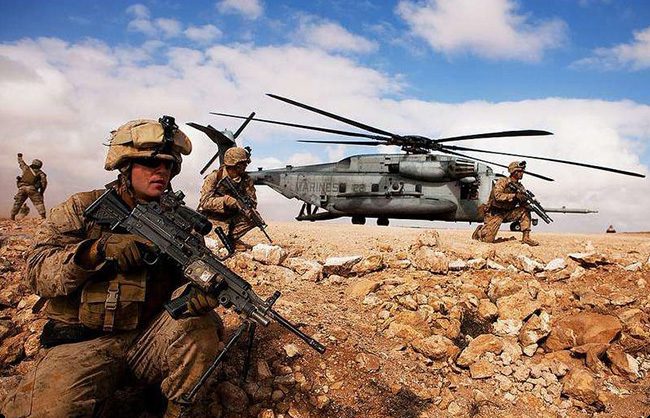
U.S. Army Southern European Task Force, Africa (SETAF-AF) and the Royal Moroccan Armed Forces (Forces Armées Royales, or FAR) opened planning for African Lion 2027 in Agadir, Morocco, with a five-day event that ran from 21 to 25 September 2026.
African Lion is the largest multinational military exercise on the African continent. Morocco and the United States have run it together since 2004, and the 2027 edition will coincide with the 250th anniversary of Morocco’s recognition of the United States in 1777.
Planners met at the FAR Southern Zone headquarters to set goals, fix timelines and name possible training sites. Smaller working groups used space at the joint task force headquarters to work through organization and logistics.
U.S. Army Colonel Benjamin Roark, director of training and exercises for the SETAF-AF G7 (the staff section that runs training), described the week as a starting point. “This initial planning event is where we begin laying the groundwork for African Lion 2027,” Colonel Roark said.
Planners expect more than 45 nations across land, sea, air, space, cyber and intelligence domains. U.S. Africa Command (AFRICOM) put the 2026 edition at more than 5,600 personnel from over 40 nations, spread across Morocco, Ghana, Senegal and Tunisia. The 2025 edition drew about 10,000 troops. No personnel total has been published for 2027.
The planning sequence, known as the glide path, includes a main planning event in December 2026 and a final event in February 2027. “African Lion remains focussed on building combined joint force readiness. The exercise enables us to work with our multinational partners to ensure that, when asked, we are able to deploy forward and operate as a multinational force,” US Army Lieutenant Colonel Corbett Baxter, branch chief and lead planner for African Lion, SETAF-AF G7, is reported as saying.
The cycle follows the pattern of the last edition. For African Lion 2025, planners held an initial event in Agadir in September 2024 and a main event there on 18 to 22 November 2024, and they have said preparation needs to start about two years ahead. The 2027 initial event falls about seven months before the planned start, a similar gap.
The start date for execution is unsettled. The U.S. Army account of the Agadir event gives 19 April 2027. Moroccan press reports citing the FAR give 25 April to 7 May 2027, with activity in Agadir, Tan-Tan, Guelmim, Benguerir, Kenitra and Dakhla. This report checked both on 9 October 2026 and found no source that reconciles them. The gap could reflect separate phases, but no source says so.
What the planners are weighing
Planners are considering combined-arms maneuvers, in which infantry, armor, artillery and aviation operate together, along with live-fire events and maritime and air operations. A command field exercise (CFX), in which headquarters staffs direct units in the field, is the centerpiece.
Other proposals include special operations training at Cap Draa and possible training against weapons of mass destruction, meaning chemical, biological, radiological and nuclear threats, in Agadir. Humanitarian civic assistance projects are also on the list. SETAF-AF says all of these remain under review while teams refine concepts of operations, logistics and site surveys.
The CFX is built to bring vendors and industry partners directly into training, so new technology is tested alongside military units in realistic scenarios. U.S. Army Lieutenant Colonel Corbett Baxter, branch chief and lead planner for African Lion at the SETAF-AF G7, tied the exercise to a practical goal. “African Lion remains focused on building combined joint force readiness,” Lieutenant Colonel Baxter said.
Mixing commercial equipment with multinational units carries a cost. Vendors need controlled conditions and safe ranges, while units need their own training objectives met. Planners will have to balance the two. The Army says the exercise offers venues for safe industry participation; how that works at the scale of 45 nations is not yet public.
An academic program is also under review. Courses cover joint operations planning, intelligence operations, cybersecurity, electronic warfare and noncommissioned officer development. These sessions target staff skills and doctrine rather than hardware.
Cyber may move into the field
Cyber training could shift from the classroom to the exercise itself. At a working group in Bedford, Massachusetts, from 27 to 31 July 2026, Moroccan representatives asked U.S. specialists whether National Guard exercises such as Cyber Shield and Wolverine could validate the cyber protection teams the FAR is forming. The U.S. Army published its account on 29 September 2026. Moroccan personnel had already observed Utah cyber teams at Wolverine in April.
U.S. Air Force Captain Robert Matheny, who directs the Utah National Guard’s state partnership program, said the Moroccan side wants cyber activity inside African Lion and not only in training. He said the Utah Guard plans cyber-focused expert exchanges in next year’s program and expects to plan a cyberattack scenario for future editions. Utah and Morocco have worked together through the U.S. State Partnership Program since 2003.
This is a proposal, not a scheduled event. The Army has not announced that a cyberattack scenario will run in the 2027 field phase.
Morocco World News also reported that, before the 2026 field phase, U.S. and Moroccan forces completed a first test linking Moroccan equipment to the U.S. Link 16 network, a secure tactical data link that shares position and track data between aircraft, ships and ground units. This report could not confirm that test from a primary source.
What it means
For the FAR, the cyber requests and the industry track point the same way: more testing of new capability under realistic conditions, with U.S. help. For the United States, the exercise stays a place to trial technology and practice running a multinational headquarters on partner territory.
Whether cyber remains a classroom subject or becomes a live scenario depends on decisions not yet made. The same goes for how far industry testing reaches into the field phase.
The next marker is the main planning event in December 2026, which should settle the start date, the site list and how much of the industry and cyber agenda becomes a plan.
Alongside field training, African Lion planners are developing an academic programme. Courses under review include joint operations planning, intelligence operations, cybersecurity, electronic warfare and non-commissioned officer development. These sessions intend to build doctrinal knowledge and staff skills in support of operational objectives.
The 250th anniversary commemoration marks Morocco’s recognition of the US as a nation and, according to Beagle, ushers in a new era of partnership, readiness and innovation, setting the stage for emerging technologies and multinational co-operation across the African theatre.
US-Moroccan relations are being highlighted as well at the 2026 Marrakech Airshow (MAS) at the Marrakech Royal Moroccan Air Force Base taking place from 7 to 10 October. The highlight of the American Airpower portion will be a dynamic F-35A Lightning II stealth fighter flyby, demonstrating the unmatched, integrated capabilities of the US–Moroccan security partnership in North Africa, Africom said.