

A practical look at what buyers should check before approving a plate and the evidence behind it
Put three black-coated ballistic plates on a table and, at first glance, they may look much the same. The differences are mostly hidden. Under the cover are decisions about the strike face, backing, adhesive, edge support and curvature. A small change in any one of those areas can show up later as extra weight, a poor fit in the carrier or a different result in testing.
Procurement conversations often begin with one word: ceramic, UHMWPE or steel. It is a convenient shorthand, but not much of a specification. What threat is the plate intended for? Which standard edition applies, and what size was actually tested? Those answers give the material choice some context.
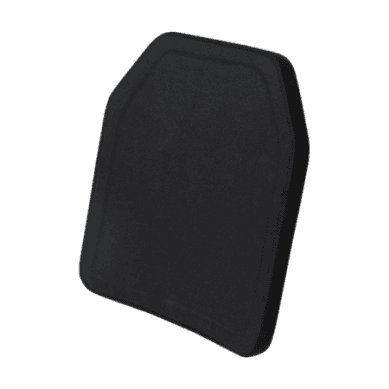
Angled exterior view of a curved ballistic plate. The photograph shows geometry and edge finish, not the internal material or protection level. Source: TACAN Safety product gallery.
A catalogue description is only the starting point
TACAN Protective Equipment was established in 2011 and supplies distributors, contractors and institutional buyers. A request may arrive as a short line such as ‘Level IV, medium, multi-curve.’ Turning that line into a buildable order takes more work: the cut, nominal dimensions, thickness tolerance, finish, markings and documents all have to be pinned down before production.
The TACAN Safety ballistic-plate range covers ceramic-composite, UHMWPE and steel options. For a buyer, however, the useful result is not a longer catalogue. It is a quotation that can be traced to the approved sample, the label on the production plate and the evidence supplied with the order. Those records should continue describing the same construction.
Material names can hide more than they reveal
Ceramic-composite plates pair a hard strike face with a backing that manages fragments and the energy left after impact. Alumina remains common when price matters. Silicon carbide may bring the weight down, although the raw material costs more; boron carbide is normally reserved for demanding lightweight designs. Those labels still leave open some important questions. Tile layout, edge support and the bond between the ceramic and backing can alter the behavior of the finished plate. Even the way the face is divided into tiles can affect what happens near an edge or after an earlier strike. A material comparison therefore helps narrow the field, but it cannot stand in for reviewing the complete construction.
UHMWPE works differently. Layers of high-performance polyethylene fiber are consolidated into a rigid structure, producing a useful weight advantage for certain rifle threats. Buyers should look at the complete plate, not the fiber brochure. Heat exposure, finished thickness and the exact test round all matter, and a change in size can make a seemingly attractive weight figure much less impressive.
Steel is the blunt option: durable, comparatively economical and heavy. Coating, edge condition and any fragmentation-management layer belong in the specification, not on a color chart. No material family wins by default; the mission and weight allowance decide the useful compromise.
What actually changes on the production floor
Incoming inspection rarely appears in a sales photograph, yet it is where many later problems can be stopped. Ceramic pieces need dimensional and defect checks. Backing and cover materials need positive identification. For steel, the grade and incoming condition matter; for adhesives, the lot and storage history may matter just as much as the label on the container. A single visual check cannot cover all of those materials.
Assembly control is equally specific. A ceramic strike face needs sound support near the edge, and gaps or poor alignment can create weak areas. A polyethylene plate depends on repeatable consolidation. Steel brings its own issues in cutting, forming and coating adhesion. These are ordinary production details, but they are also the details that separate a repeatable batch from a one-off sample. Process records should make it possible to trace the adhesive lot, consolidation or cure conditions and the operators or equipment used for the batch. The amount of detail will differ by factory, but a supplier should be able to explain what is controlled and what is merely checked at the end.
The last cover creates a blind spot. Once it is fitted, the internal stack is out of view. Weight, dimensions, labels and work records have to carry the evidence; a neat exterior cannot do that job.
Read the protection claim literally
Shape and use case are part of the claim. A plate may be stand-alone or intended to work with specified soft armor. It may be flat, single-curve or multi-curve, with a SAPI-style, shooter or custom cut. Removing material can improve comfort and reduce weight, but it also changes coverage. That trade should be made deliberately, not discovered after the shipment arrives.
A phrase such as ‘Level IV plate’ sounds precise until two customized versions are placed next to each other. The test report needs to point back to the model being purchased. Check the standard edition, ammunition or threat designation, reference velocity and conditioning, as well as the size and construction of the tested sample. Look at the date too, and ask whether subsequent material or process changes were reviewed. A report for a flat alumina plate cannot automatically support a lighter multi-curve plate simply because the product names share a prefix. If the report describes a different configuration, the familiar level marking does not close the gap.
Terminology is now another source of confusion. Many tenders still call for NIJ 0101.06 Level III or Level IV. Newer U.S. documents use RF1, RF2 and RF3 alongside NIJ 0101.07 and NIJ 0123.00. RF2 is an intermediate rifle level, not a casual replacement name for an older category. The safest practice is simple: copy the designation from the governing requirement and the supporting test record.
The approved sample is not the whole order
A good pre-production sample can still be followed by a disappointing batch. Material lots move, adhesive handling changes with temperature, and curvature drifts. Small differences become visible when a carrier size range or a strict weight ceiling is involved.
For that reason, routine inspection and ballistic testing should not be treated as the same activity. The first can cover weight, dimensions, curvature, surface condition, labels and traceability on a practical sample of the lot. Ballistic testing destroys the plate. The buyer and supplier therefore need to agree in advance what a lot means, how test samples are chosen and what happens if a result falls outside the acceptance rule. The agreement should also say who selects the laboratory and whether witnessed testing is required. Without those details, a request to ‘test one plate per order’ can create an argument at exactly the point when the shipment is ready.
Before release, place four identifiers side by side: the quotation model, approved-sample code, production label and model named in the test report. They may differ on a private-label order, but the connection must be documented. If nobody can explain the chain, the file is incomplete.
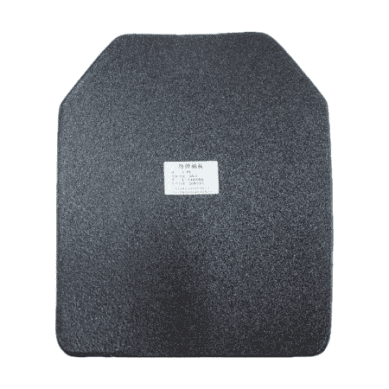
Rear-face product view with an identification label. Model and label details should be matched to the quotation and supporting test record. Source: TACAN Safety product gallery.
Check the batch that was delivered
Receiving inspection should start with the plate in hand. Record its actual width and height, finished weight, thickness range, cut, curvature, corner radius, surface finish and label. Compare like with like: a medium plate and a smaller shooter cut do not provide a useful weight comparison, even when both carry the same level name.
Then try it in the intended carrier. A plate can enter the pocket and still sit too low, pull against the closure or restrict movement. Orders covering several sizes deserve a compact size-set review rather than approval of a single convenient sample. Check the smallest and largest sizes as well as the volume size, and do not assume that a successful medium plate proves the curve on every other shell. Photographing the fit and recording the sample codes gives both sides something concrete to return to if production questions arise. That extra review is usually far cheaper than sorting out an entire lot after delivery.
Different users make different compromises
Military programs tend to put rifle threats, environmental durability and compatibility with issued carriers near the top of the list. Police users may give more weight to daily wear, vehicle access and department policy. Distributors and security contractors often care about size coverage, private labeling and documents they can reproduce for several customers. One construction will not serve all three equally well.
Lower weight, stronger edges and more consistent multi-curve shapes will remain development targets. Better traceability should follow. Still, the purchasing work is familiar: define the threat, identify the tested build and check the production lot.
A final purchasing test
Could someone outside the project follow the file and identify what was ordered, tested and delivered? If not, the specification needs another pass. A reliable purchase connects the material and protection claim to one controlled, traceable plate.
Technical references
National Institute of Justice: Ballistic Resistance of Body Armor, NIJ Standard 0101.07
National Institute of Justice: Specification for NIJ Ballistic Protection Levels and Associated Test Threats, NIJ Standard 0123.00