
U.S. Army Southern European Task Force, Africa (SETAF-AF) has partnered with the Army’s Global Tactical Edge Acquisition Directorate (G-TEAD) to test emerging drone and counter-drone systems in Africa and deliver them to soldiers within 180 days, the command announced from its headquarters in Vicenza, Italy, on 16 October 2026. Its first accelerated capability event is scheduled for spring 2027 in Tan-Tan, Morocco.
The event will focus on counter-unmanned aircraft systems (C-UAS) and force protection, targeting capability gaps in protecting early-entry command posts and operating locations against small unmanned aircraft systems (sUAS). SETAF-AF describes the aim as “accelerating the delivery of combat-ready capabilities to the tactical edge”.
According to the Army, Africa offers an open electromagnetic spectrum, uncongested airspace and diverse terrain that training ranges in the United States and Europe cannot easily match. These conditions allow soldiers to validate solutions in theatre and then scale them across the service.
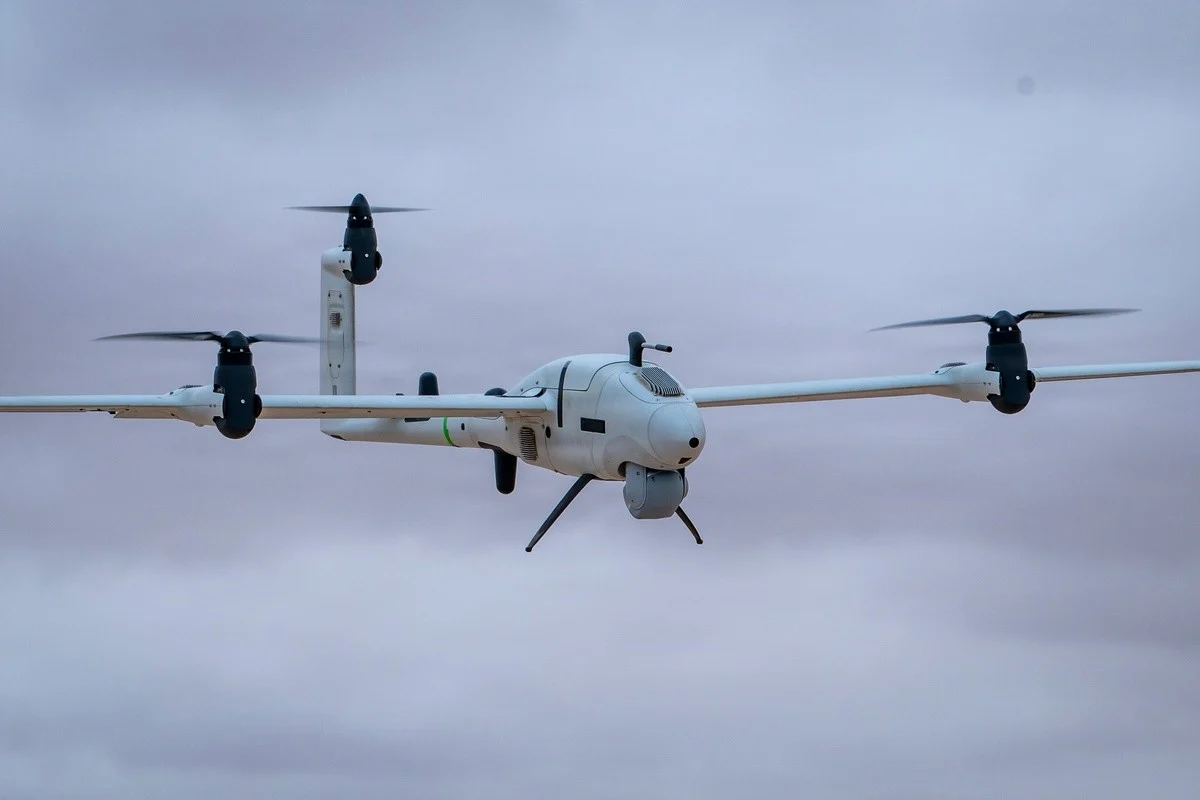
Acquisition authority at the tactical edge
G-TEAD operates under the Army Pathway for Innovation and Technology Office and embeds personnel within Army service component commands. These teams translate urgent commander priorities into executable requirements, giving field commanders access to acquisition authorities at the tactical edge. The teams already work within U.S. Army Europe and Africa, U.S. Army Pacific and U.S. Army Central, and G-TEAD assigned a team to SETAF-AF this summer to link immediate operational needs with rapid acquisition resources.
Army Colonel Christopher Hill, director of G-TEAD, described the organisation as the Army’s answer for putting innovative solutions in the hands of the warfighter. “[Army service component commands have] always had priorities, they’ve always had capability gaps, but the two things they’ve never had is acquisition authority and research, development, test and evaluation dollars,” he said.
Because the directorate has visibility across several commands, Hill said its personnel can align modernisation efforts, make the most of funding and transition proven theatre solutions Army-wide. “Soldiers need capability,” he said. “We have to come in, and we have to actually perform and produce.” Hill added that every system is evaluated with a view to scaling across the service, so that tactical lessons learned in Africa improve readiness across the force.
Three phases, five categories, 15 solutions
The two commands will use the accelerated capability event framework as a fast-track pathway to identify, evaluate and deliver field-ready technology. It runs in three phases: submission and preparation, soldier-led demonstrations, and follow-on operational evaluation.
“[Accelerated capability events] are driven by real, urgent, theater-specific technology gaps,” said U.S. Army Major Katlin VanWye, a G-TEAD representative embedded with SETAF-AF. “We take commanding general’s priorities and translate those immediate tactical challenges into clear, executable technical requirements that defense prize-authority partners and Portfolio Acquisition Executive partners can actually action.”
SETAF-AF will hold the soldier-led demonstration in February and March 2027 in Tan-Tan, followed by an operational assessment in April and May during African Lion 2027, U.S. Africa Command’s largest joint military exercise in Africa. G-TEAD will validate up to 15 solutions, with Portfolio Acquisition Executive (PAE) Fires, the Army modernisation organisation responsible for shaping, integrating and delivering its most critical fires capabilities, as the transition partner.
“The [accelerated capability events] is structured around five capability categories,” VanWye said. “An overarching, completely integrated fly-away kit and four subcategories focused on sUAS detection, kinetic defeat, nonkinetic defeat and passive protection. Solutions will integrate into the Army’s C-UAS command and control Integrated Battle Command System-Maneuver.”
Tan-Tan’s growing role
The choice of Tan-Tan builds on a run of US-Moroccan activity at the site. In July 2026, Morocco and AFRICOM signed a memorandum to build the Africa Multidomain Training and Experimentation Center (AMTEC) there, combining a multidomain training area, a drone academy and an innovation centre, with African Lion 2027 named as its first proof of concept. During African Lion 2026, the Army tested robotic assault tactics at Cap Draa, and in August the two countries carried out a live-fire demonstration of a low-cost, long-range cruise missile.
Counter-drone work has become a priority for US forces on the continent. AFRICOM has been evaluating the Curtain Call counter-drone swarm system, which completed a second test in California in June, as armed groups in the Sahel and elsewhere make growing use of commercial and modified drones against bases and convoys.
From the Moroccan desert to the wider Army
The Army says the initiative supports its broader modernisation priorities while reinforcing partner-led security across the theatre, giving the joint force wider strategic options as it validates new capabilities for the whole Army. The test of the 180-day promise will come after African Lion 2027: whether the counter-drone kits judged best at Tan-Tan reach units by late 2027, and whether Moroccan and other African forces training alongside them gain access to the same detection and defeat tools against the small drones now common across the Sahel.