

The Sudanese Armed Forces (SAF) are in the final stages of securing a 1.5 billion dollar military procurement deal with Pakistan, a move that promises to alter the tactical landscape of the ongoing Sudanese civil war. This agreement represents a major expansion of Pakistan’s role as a defence exporter in Africa and the Middle East. According to reports from retired air force officials and industrial sources, as reported by Reuters, the deal focuses on restoring the air supremacy of the SAF as it battles the paramilitary Rapid Support Forces (RSF). The package reportedly includes 10 Karakoram-8 (K-8) light attack aircraft, more than 200 unmanned aerial vehicles (UAVs) for scouting and strike missions, and advanced air defence systems.
The inclusion of the K-8 aircraft provides the Sudanese military with a proven platform for both training and counterinsurgency. Developed as a joint venture between the Pakistan Aeronautical Complex (PAC) and China, the K-8 is a single-engine, tandem-seat jet that serves as an advanced trainer but possesses notable combat utility. It features five hardpoints capable of carrying a 1,000-kilogram payload, which typically includes 23mm cannon pods, unguided rockets, and diverse bomb types. For the SAF, the K-8 offers a favourable cost-to-performance ratio; it is far less expensive to operate than high-end multirole fighters while remaining effective for close air support in environments where the enemy lacks sophisticated high-altitude anti-aircraft weaponry.
The drone component of this deal is perhaps the most transformative element for the current conflict. With a commitment to over 200 units, the SAF aims to counter the RSF’s effective use of small, agile drones that have eroded the army’s traditional territorial advantages. The package includes both reconnaissance platforms and loitering munitions, commonly referred to as kamikaze drones. These systems allow for persistent over-watch of urban and desert environments, providing real-time intelligence on RSF troop movements. Loitering munitions, in particular, offer the ability to strike high-value targets with high precision and minimal collateral damage. While specific models were not named, Pakistan’s Global Industrial and Defence Solutions (GIDS) has been active in marketing the Shahpar series of tactical UAVs, which feature automated take-off and landing systems and long-endurance capabilities.
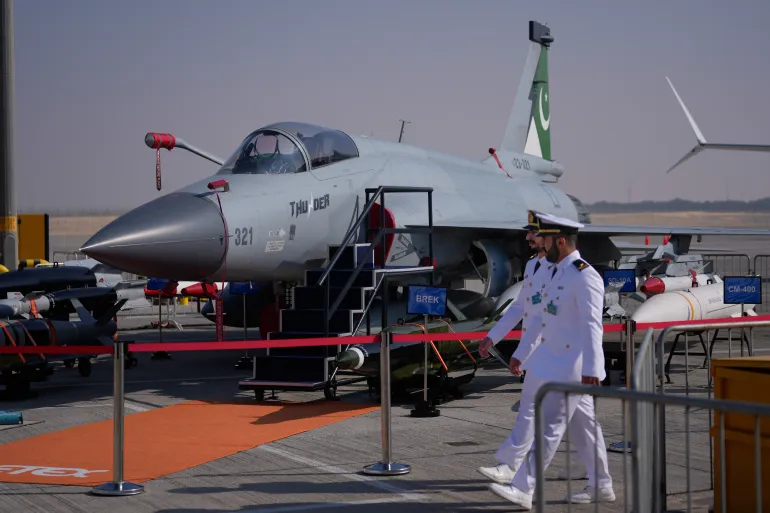
Beyond light attack and unmanned systems, the deal may also involve more sophisticated assets. Sources indicate the potential inclusion of Super Mushshak primary trainers and the JF-17 Thunder multirole fighter. The JF-17, jointly developed with China and produced in Pakistan, would represent a major upgrade for the Sudanese air wing. If the JF-17 Block III is included, Sudan would gain access to an active electronically scanned array (AESA) radar and long-range air-to-air missile compatibility. This would provide a substantial deterrent against external aerial interference. However, the exact numbers and delivery schedule for these high-end fighters remain unconfirmed as of early 2026.
The financing of this 1.5 billion dollar acquisition has drawn intense interest from regional analysts. While the sources of funding are not explicitly stated, some military officials suggest that Saudi Arabia may be supporting or brokering the procurement. This occurs amid a complex geopolitical environment in the Red Sea region. The SAF has accused the United Arab Emirates (UAE) of supplying the RSF, though Abu Dhabi denies these claims. A strengthening of the SAF’s aerial capabilities through Pakistani hardware could shift the regional balance of power. Furthermore, the deal surfaces during a period of increased friction between Saudi Arabia and the UAE, specifically regarding their differing objectives in Yemen and broader Middle Eastern geopolitics.
For Pakistan, this agreement is a clear indicator of its growing ambitions within the global defence market. The government in Islamabad views the defence sector as a vital catalyst for long-term economic stability. This strategy is particularly relevant as Pakistan continues to navigate a 7 billion dollar International Monetary Fund (IMF) program, which was secured following financial support and deposit rollovers from Gulf allies like Saudi Arabia. By increasing its high-tech exports, Pakistan aims to generate foreign exchange and solidify its strategic partnerships across the “Global South.”
This trend of “South-South” cooperation is evident in other recent Pakistani defence initiatives. In September 2025, a delegation from GIDS visited Nigeria to discuss the joint production of UAVs, munitions, and missiles under the framework of the Defence Industries Corporation of Nigeria Act 2023. More recently, in December 2025, Pakistan signed a Memorandum of Understanding (MoU) with Egypt’s Arab Organisation for Industrialisation (AOI) during the Egypt Defence Expo (EDEX). These agreements demonstrate a growing preference among African and Middle Eastern nations for Pakistani equipment, which often comes with fewer political strings and lower costs than equipment from Western original equipment manufacturers (OEMs). Also, this January, Islamabad struck a weapons deal worth more than $4 billion with the Libyan National Army, officials said, for one of the South Asian nation’s largest arms sales, which includes JF-17 fighter jets and training aircraft.
The trade-offs for Sudan in adopting this equipment involve the long-term maintenance and technical support required for modern systems. While the K-8 and Super Mushshak are relatively straightforward to maintain, the advanced air defence systems and potential JF-17s require a sophisticated logistical tail. Pakistan has often bundled its sales with training and technical support packages, which would be essential for the SAF to effectively integrate these tools into their current operational doctrine.
As the conflict in Sudan threatens to fragment the country and disrupt vital Red Sea shipping lanes, the arrival of 1.5 billion dollars in weaponry could prove decisive. If the SAF successfully integrates these 200 drones and new aircraft, it may regain the air supremacy it enjoyed early in the war. For Pakistan, the deal emphasises the increasing competitiveness of its military-industrial complex and its ability to provide comprehensive solutions to nations facing urgent security crises.