
Russia’s ambassador to Algeria, Aleksey Solomatin, has accused Ukrainian military officers of training armed groups in the Sahel to use drones, in remarks to the Russian state news agency RIA Novosti published on Thursday 12 November 2026. “Ukrainian officers are working in Africa, training [fighters] in the use of drones,” Solomatin said, adding that the groups operate across the Sahel and Sahara-Sahel region and are destabilising several countries that border Algeria.
The ambassador did not name the groups, the countries where training allegedly takes place or the evidence behind the claim, which was carried by the state broadcaster RT. Ukraine has repeatedly denied supporting armed groups in the Sahel.
A Coordinated Line From Moscow
Solomatin’s comments follow a similar accusation a week earlier from Mikhail Maksimovich, deputy director of Russia’s Foreign Intelligence Service (SVR), who alleged that emissaries of Ukraine’s military intelligence directorate (HUR) were running drone-operator courses in Africa, particularly in Mali, including training on “kamikaze” one-way attack drones. Maksimovich also claimed that terrorist groups were seeking drone technology from Kyiv. Foreign Ministry spokeswoman Maria Zakharova has described Ukraine’s activity on the continent as an attempt to open a “second front” in Africa.
The charge itself is not new. In December 2024, the Chief of Russia’s General Staff, General Valery Gerasimov, told foreign military attachés in Moscow that Ukraine was supporting terrorist organisations in the Sahel and training them to use unmanned aerial vehicles, Interfax reported at the time.
From Tinzaouaten to Kidal
The accusations trace back to July 2024, when Tuareg separatists ambushed Malian troops and Wagner Group personnel near Tinzaouaten on the Algerian border, killing dozens. Ukrainian military intelligence spokesman Andriy Yusov later said the rebels had received “necessary information” that enabled the attack, a remark that Military Africa reported at the time. Mali and Niger cut diplomatic ties with Kyiv in August 2024, and Mali, Niger and Burkina Faso lodged a complaint with the United Nations Security Council citing Yusov’s words and comments by Ukraine’s then ambassador to Senegal. Mali has also raised the matter at the UN General Assembly.
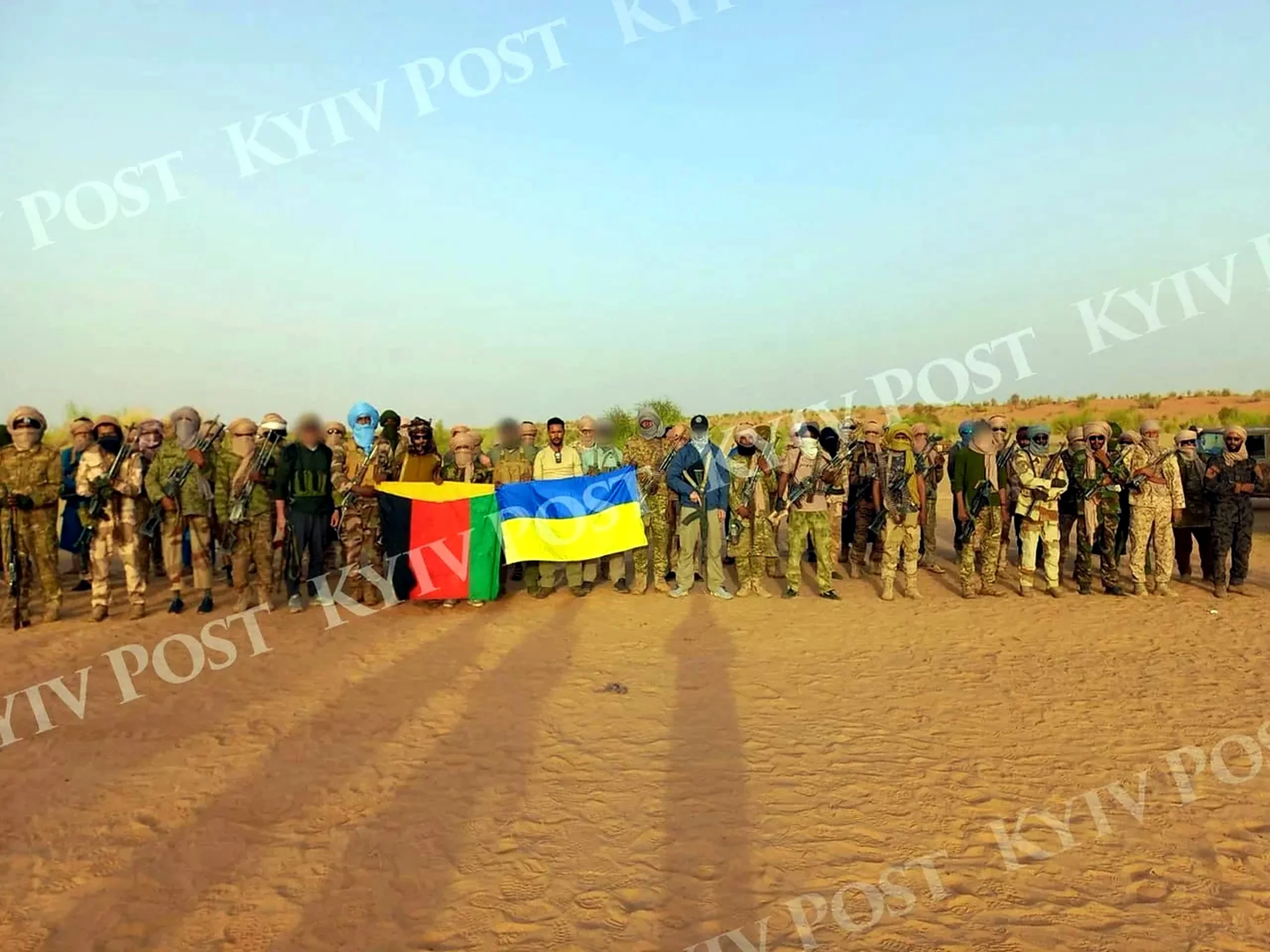
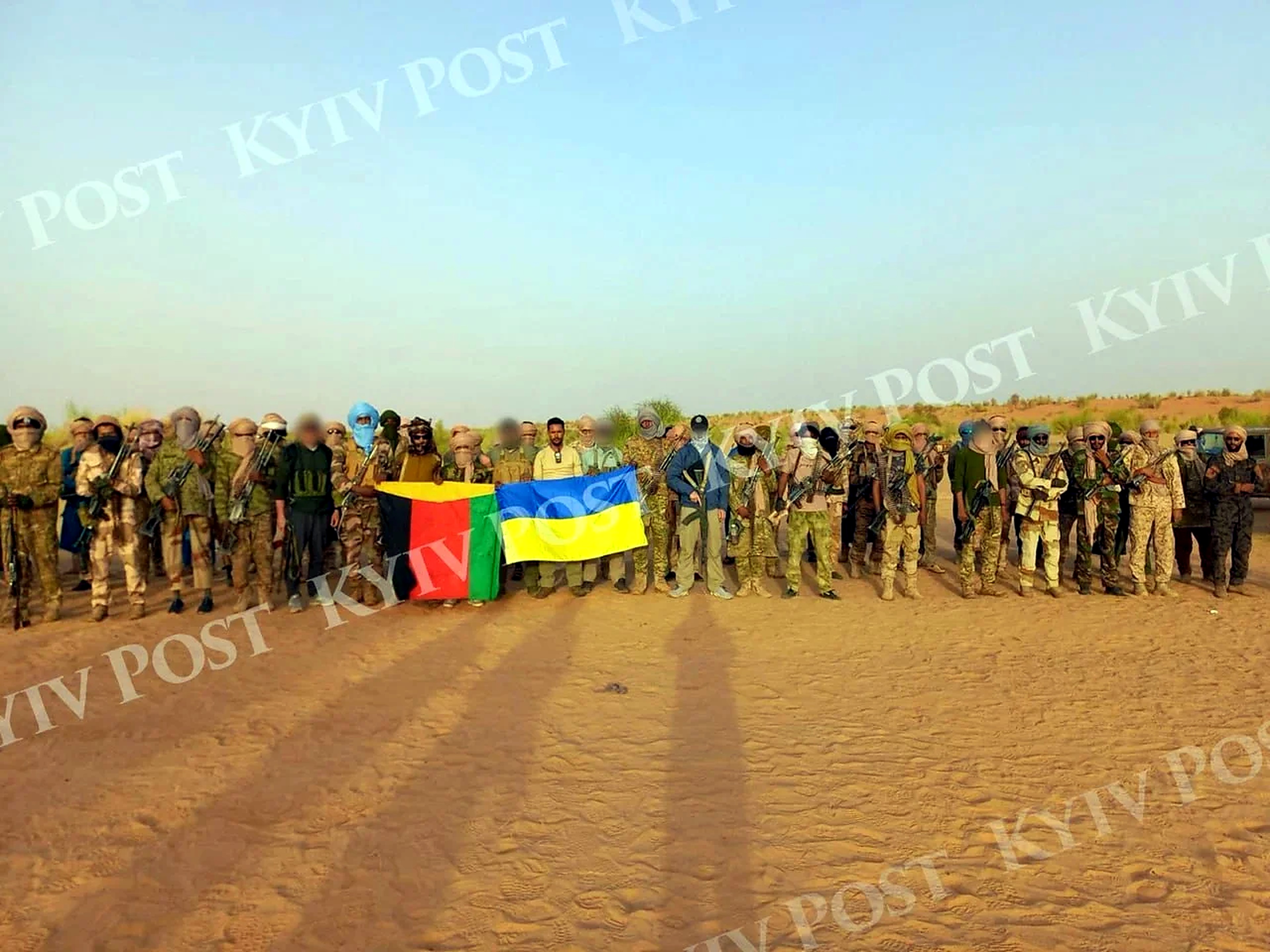
Western reporting has since added detail. In September 2026, CNN, citing Ukrainian intelligence sources, reported that about 15 Ukrainian drone specialists were deployed in northern Mali supporting the Tuareg-led Azawad Liberation Front (FLA), including by helping train fighters and remotely directing drone missions, though not fighting on the front line. CNN said the specialists had assisted the rebels during fighting earlier this year around Kidal, and that troops from Chad, Niger and Burkina Faso had previously travelled to Mali for drone training from Ukrainian soldiers, according to Euromaidan Press’s summary of the report. Le Monde has reported that cooperation between Ukrainian military intelligence and Malian rebels began in early 2024 and included drone training both in Ukraine and in the Sahel. Military Africa examined these deployments in Ukrainian drone teams operate in African countries.
Kyiv’s Denial and the Jihadist Question
Ukraine’s Foreign Ministry has said that the claims made by Mali and Niger lack “credible evidence” and “coincide with key messages of Russian propaganda” intended to damage Kyiv’s ties with African partners. The Russian statements blur an important distinction. The FLA is a separatist movement fighting Mali’s junta and Russian forces for autonomy in the north, while the Group for the Support of Islam and Muslims (JNIM), al-Qaeda’s Sahel affiliate, and the Islamic State Sahel Province are jihadist organisations. Moscow’s officials routinely describe all of them as “terrorists”, and none of the published Western reporting alleges Ukrainian training of jihadist groups.
Drones have nonetheless changed the war in northern Mali on every side. The Malian Armed Forces and Russia’s Africa Corps use Turkish Bayraktar TB2 and AKINCI drones and Russian loitering munitions, while rebels and jihadists have fielded commercial quadcopters and first-person-view (FPV) attack drones against bases, aircraft and convoys, as Military Africa has reported in Tuareg rebels and Salafi-jihadists continue to degrade Mali’s air capabilities.
Why the Message Was Delivered From Algiers
The choice of Russia’s envoy in Algiers to repeat the charge is telling. Algeria shares a long desert border with Mali and Niger, has long mediated between Bamako and the northern Tuareg movements, and has had tense relations with Mali’s junta since its air defences shot down a Malian AKINCI drone near the border in April 2025. By framing Ukrainian drone training as a threat to Algeria’s neighbourhood, Moscow appeals to Algiers’ own security worries while defending its military role in Mali. With no evidence published by either side, the dispute is likely to play out in diplomatic forums such as the UN, even as drone technology spreads among armed groups across the Sahel.