
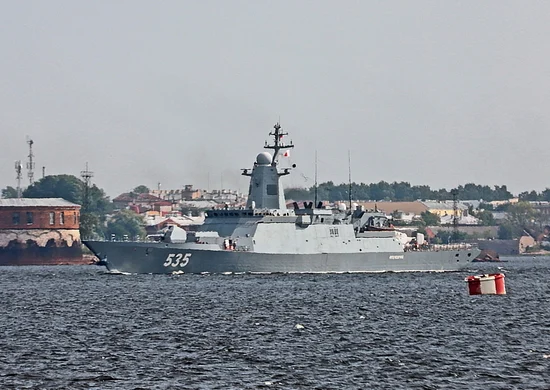
Sea drones struck the Russian Navy corvette Merkury while it lay alongside at the Benghazi Naval Base in eastern Libya on Sunday 22 November 2026, setting the ship on fire and leaving it capsized in the harbour. Two military officials of the Libyan National Army (LNA), the force that controls eastern and southern Libya, told the Associated Press that an initial investigation showed several Ukrainian sea drones had been launched at the ship from a base run by Ukrainian forces in western Libya. At least four were intercepted and destroyed, and two hit the warship, they said.
No one has claimed the attack. Neither Moscow nor Kyiv had commented by Monday morning, and the attribution to Ukraine rests on the LNA officials’ account.
What happened in Benghazi
Libya’s eastern-based government, which is aligned with LNA commander Khalifa Haftar, said the strike caused an explosion and a fire at the base that was later put out. It said the vessel had docked “for refuelling and supplies” under a cooperation agreement between Russia and the eastern administration, without naming the ship or describing its cargo, and that it had opened a joint investigation with Russia “to uncover the circumstances of the attack, its source, and the party behind it”. The Kyiv Independent quoted the same administration as saying the ship had stopped to refuel on its way back to Russia.
Satellite images obtained by The War Zone show the corvette capsized with only part of its bow above water, and show how far the drones had to travel inside the port to reach it. Medical sources told Reuters that ten people, Russian and Libyan nationals among them, suffered minor injuries, according to Fox News.
Hours later, a sea drone hit a commercial ship off Benghazi. Two Libyan military sources told Reuters the vessel was Maltese-flagged, while open-source analysts cited by the Kyiv Independent named the sanctioned Russian bulk carrier Ascalon as a possible target. Accounts of the wider attack differ: the Almasar television channel said Libyan naval and air forces destroyed at least 12 more sea drones off the city, while Libyan military sources told Reuters that more than 20 explosive-laden drone boats were intercepted on Sunday evening.
A modern corvette far from home
The Merkury is a Project 20380 Steregushchiy-class multipurpose corvette, delivered to the Russian Navy in May 2023, according to Militarnyi. Ships of the class carry Uran anti-ship missiles, a 100 mm gun and the Redut surface-to-air missile system, Kyiv Post reported. Although assigned to the Black Sea Fleet, the Merkury has operated from Northern Fleet bases during the war in Ukraine, since Türkiye’s closure of the Turkish Straits to warships keeps Russian reinforcements out of the Black Sea. In April 2024 it escorted two Russian landing ships from Syria to Libya.
Ukrainian outlets said the corvette had been escorting merchant ships carrying Russian military cargo. That claim has not been confirmed by Moscow or Benghazi. It fits a pattern of Russian naval escorts on the Libyan run: in September 2026 the cargo ships Anastasiia and Yuriy Arshenevskiy, escorted by the landing ship Aleksandr Shabalin, unloaded armoured vehicles at Tobruk, Il Foglio and Defence Blog reported.
Libya’s second war
The sinking is the most serious incident yet in a shadow contest between Russia and Ukraine on Libyan soil. Libyan officials told the AP that Ukrainian forces, most of them drone specialists, have operated under a covert arrangement mainly from an air base at Misrata, as well as from military sites in Tripoli and Zawiya. In March 2026, Russia accused Ukraine of launching a drone attack from Libya on the Russian-flagged liquefied natural gas (LNG) tanker Arctic Metagaz, and in December 2025 a source in Ukraine’s Security Service (SBU) said the shadow-fleet tanker Qendil had been struck in the Mediterranean, an attack Radio France Internationale (RFI) later traced to Misrata.
Russia, for its part, has made eastern Libya the logistics hub for its military presence in Africa since losing its bases in Syria after the fall of Bashar al-Assad in December 2024. Military Africa reported this month that Moscow is widening its military reach across the continent but struggling to deliver, and Benghazi and Tobruk are the ports through which much of that effort flows to the Africa Corps in Mali and Niger.
The government in Tripoli, which is internationally recognised and which Ukraine’s presence depends on, distanced itself from the strike. “The Government categorically rejects the transformation of Libya into an arena for international conflicts or a theater for foreign powers to settle scores,” it said, adding that it opposes the use of Libyan “territory, ports, or territorial waters for any military or logistical activities that could jeopardize the security of the Libyan people or the sovereignty of the state.”
The Benghazi attack came a day after a sanctioned Russian cargo ship, Sparta II, was hit by a drone in the Gulf of Finland. Kyiv has not claimed that incident either.
Benghazi’s Exposed Harbour
For Russia, the loss of a modern corvette inside a friendly port shows that its Libyan staging posts are now within reach of the same uncrewed surface vessels that drove the Black Sea Fleet out of much of the western Black Sea. Russian ships bound for Tobruk and Benghazi must pass through the Strait of Gibraltar and along western Libya’s coast, inside the range of any drone teams operating from Misrata. For Libya, the strike drags a divided country further into a war that is not its own, with both rival governments now hosting one side each. The joint Russian-LNA investigation, and whether Moscow changes how it escorts its Africa-bound convoys, will show how far the attack alters Russia’s supply line to the Sahel.