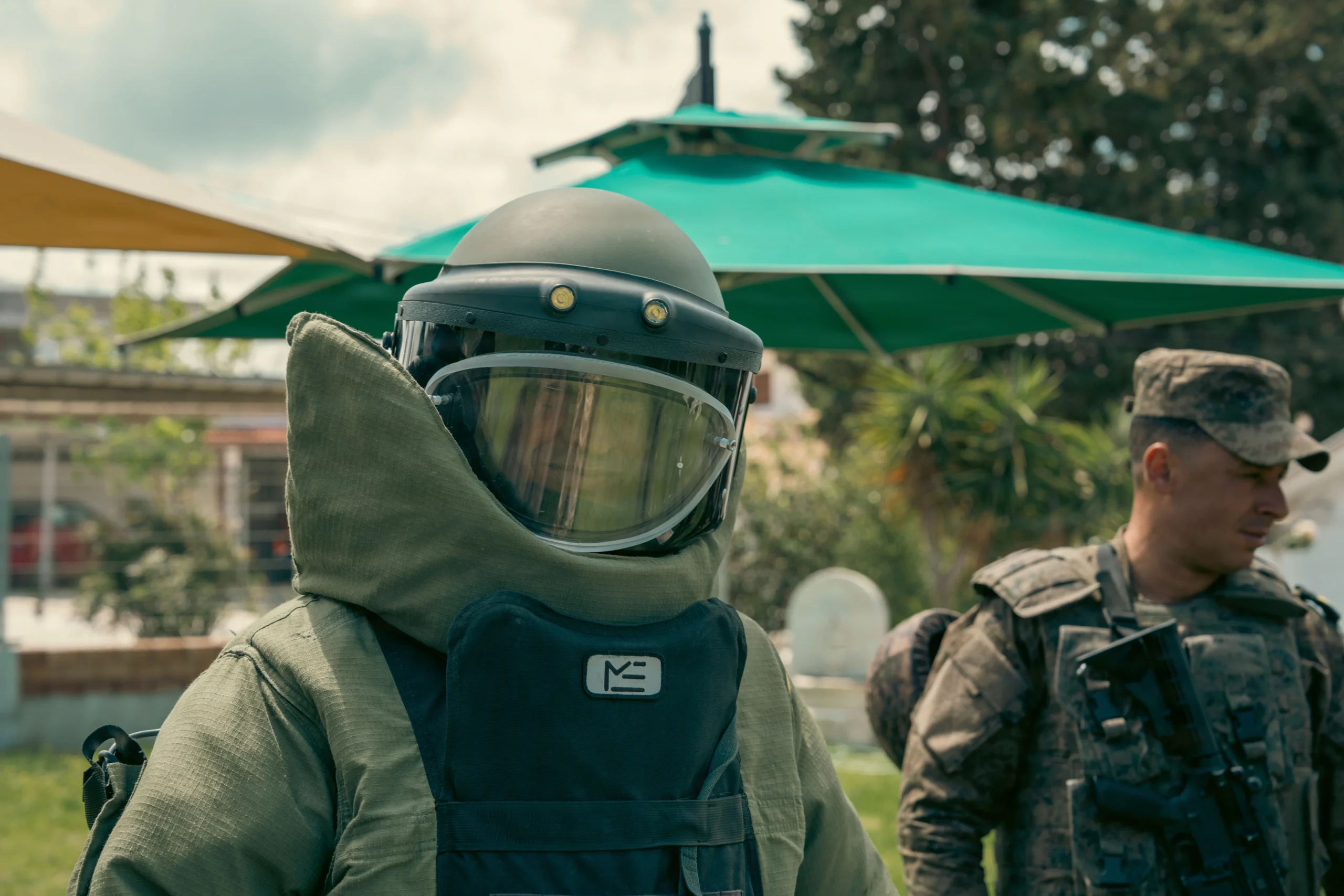
The United States on 30 September handed Tunisia security equipment worth about $1 million to help train and certify law enforcement officers in crisis response and specialised security skills, the latest in a run of American transfers to the North African country this year.
US Ambassador Bill Bazzi delivered the equipment to two bodies under Tunisia’s Ministry of the Interior, the General Directorate of Intervention Units and the General Directorate of the National Guard, according to the US Embassy in Tunis. The embassy did not disclose the type or quantity of equipment. The transfer falls under the State Department’s Anti-Terrorism Assistance (ATA) programme, which provides training and equipment grants to partner law enforcement agencies, helps them address security challenges and aims to deter terrorist operations. The embassy said the support would strengthen security capacity in Tunisia and the wider region.
The Intervention Units and the National Guard’s special unit lead Tunisia’s armed response to terrorist incidents, and both have trained under the ATA programme for more than a decade. The delivery comes amid a steady rise in US military and logistical support for Tunis.
A Year of Steady US Deliveries
The September handover follows a similar ATA transfer worth $1.4 million. That equipment was delivered in mid-December 2025 and made public in January, when the embassy said that “the enduring US-Tunisia security partnership strengthens the safety and security of both countries and advances regional stability.”
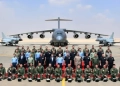
In January, Tunisia also accepted an additional C-130H Hercules from US inventory, adding airlift for moving troops and equipment to forward positions. It follows an earlier C-130 delivery to the Tunisian Air Force in November 2024.
In early June, the United States transferred 48 armoured High Mobility Multipurpose Wheeled Vehicles (HMMWVs), commonly known as Humvees, to the Tunisian Army at a ceremony at El Aouina military base in Tunis. Humvees carry troops, conduct medical evacuations and perform combat patrols, and are known for their reliability in extremely harsh environments. Armoured versions can mount machine guns and grenade launchers. The vehicles are expected to help counter smuggling and militant activity along Tunisia’s borders with Algeria and Libya. Washington delivered its first batch of 52 Humvees to Tunisia in 2015.
On 24 June, Ambassador Bazzi commissioned an advanced radiation detection system at the Port of Radès, the country’s largest port. The system, the first of its kind in Tunisia, was provided and installed by the US Department of Energy’s National Nuclear Security Administration (NNSA) with Tunisia’s National Centre for Nuclear Sciences and Technologies, and is designed to detect nuclear and radiological material moving through the port.
Larger programmes sit behind these handovers. On 27 April, the State Department cleared a $95 million possible Foreign Military Sale (FMS) for Phase III of Tunisia’s Border Security Project, covering Border Reaction Unit vehicles, surveillance radars, thermal and perimeter cameras, relay towers and microwave links for remote border areas, The Defense Post reported. In 2025, Tunisia also joined the Javelin anti-tank missile user group under a US Army contract extension. According to the US Embassy, Washington has invested more than $1 billion in security cooperation with Tunis since 2011.
A Persistent but Contained Threat
Tunisia has not suffered a major terrorist attack since May 2023, when a gunman killed two worshippers and three security officers at the Ghriba synagogue, the country’s oldest, on the island of Djerba. The threat, however, has not gone away.
On 3 January, security forces stopped a planned attack near the weekly market in Fériana, in Kasserine governorate, killing the ringleader, Seddik El Abidi. The Tunisian-born militant was a member of the Jund al-Khilafa (Soldiers of the Caliphate) battalion, an offshoot of the Islamic State (IS) group, the news agency Tuniscope reported. Authorities arrested an accomplice and later detained ten more people linked to the plot. A security officer wounded in the operation later died of his injuries, according to the Jamestown Foundation.
Less than three weeks later, on 22 January, authorities dismantled a four-member terrorist cell near Majel Bel Abbès, close to the Tunisian-Algerian border, also in Kasserine. All four were killed, including a man who detonated a suicide vest after refusing to surrender. The Interior Ministry said all four were Tunisian and belonged to the same family.
Tunisia also faces insecurity on its Libyan frontier. Both borders carry risks of weapons smuggling, low-level insurgency and militant infiltration into the mountainous western zones around Kasserine and Sidi Bouzid. Groups linked to al-Qaida and IS have a minimal presence in the country, but authorities still face threats from individuals radicalised online and must monitor and process former foreign fighters who joined extremist groups in Iraq, Libya and Syria.
Tunisian authorities reported dismantling 62 terrorist cells and arresting 2,038 people linked to extremism in 2025. The nationwide state of emergency declared after the 2015 attacks remains in force, and President Kais Saied extended it in January to 31 December 2026. Analysts at Jamestown describe the remaining networks as fragmented and localised, using the rugged terrain along the Algerian border as survival spaces rather than as platforms for national-level attacks.
Partnership Beyond Equipment
Tunisian Defence Minister Khaled Sehili in July expressed satisfaction with the level of military cooperation between Tunis and Washington, which he described as “deep, diversified and constantly developing.” He made the remarks on 22 July when he received Gen. Dagvin Anderson, commander of United States Africa Command (AFRICOM), at the defence ministry, with Ambassador Bazzi in attendance.
Sehili told Anderson that the bilateral strategic partnership is not limited to logistical and technical support for the armed forces, but also includes training, education and joint exercises. He also expressed Tunisia’s “interest in further developing this collaboration, exploring new opportunities in the transfer of defense technologies and expanding cooperation in the strategic and intelligence sectors,” according to a report by Italy’s Nova News online platform.
Anderson praised the countries’ strategic partnership and noted “the skills and training capabilities of the Tunisian army demonstrated during the African Lion 26 exercise,” Nova News reported. He also pointed to the next session of the Tunisian-American Joint Military Committee, scheduled in the United States in September, as an opportunity to review bilateral military cooperation.
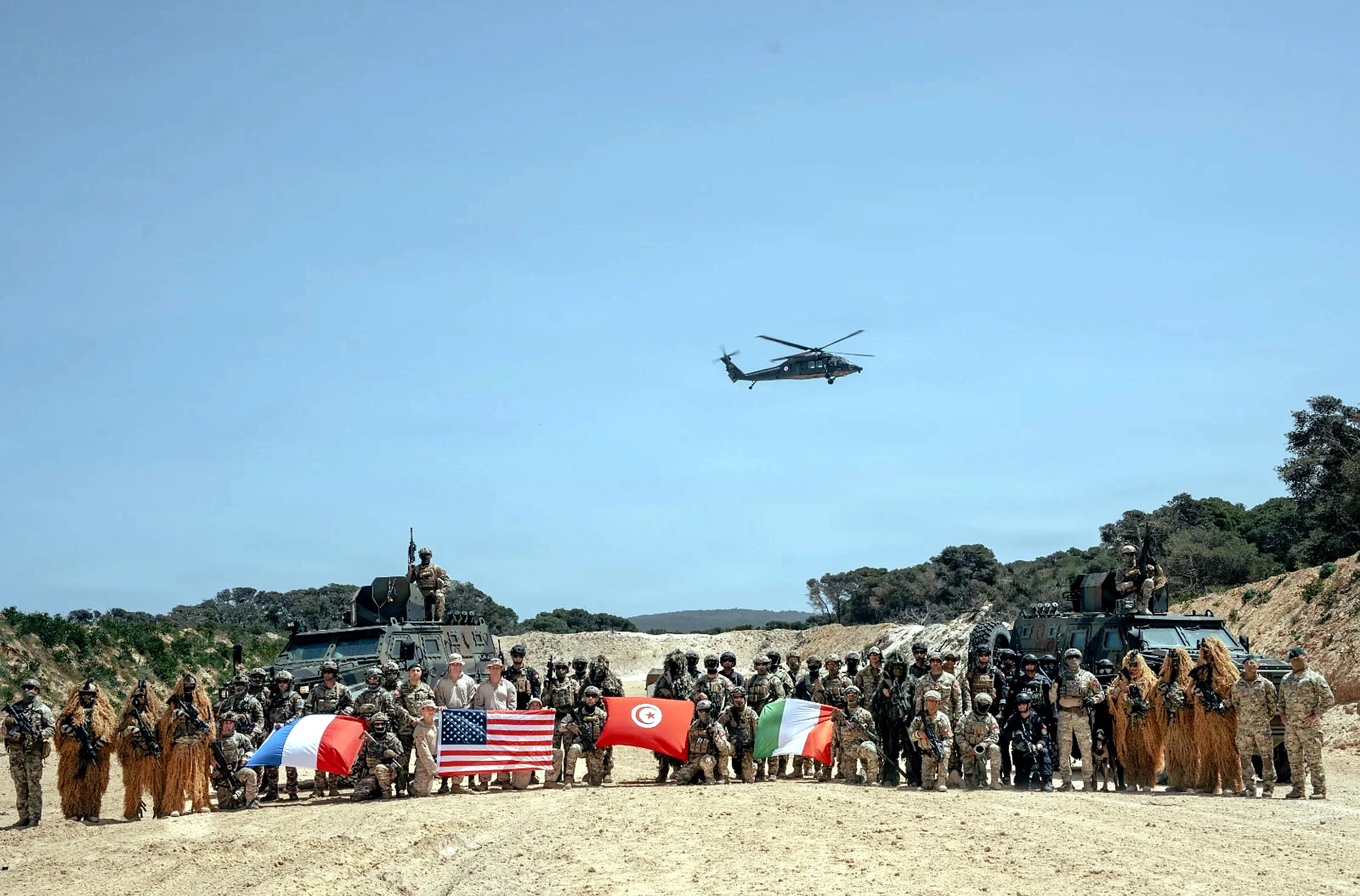
African Lion is AFRICOM’s largest annual joint exercise. Tunisia co-hosted this year’s iteration in April, its tenth consecutive year as a host nation. The Tunisian leg opened at El Aouina Air Base on 13 April and closed in Bizerte on 29 April, with around 560 personnel from Tunisia, the United States, France and Italy training in counterterrorism, explosive ordnance disposal, cyber defence and medical response. Across Ghana, Morocco, Senegal and Tunisia, African Lion 2026 involved more than 5,600 personnel from over 40 nations. In September, Tunisia also hosted the multinational naval exercise Phoenix Express 2026.
Drug Trafficking and Transnational Crime
A new focus of security cooperation between Tunisia and the United States is the fight against drug trafficking and transnational crime. A delegation of 14 Tunisian interministerial officials from the security, education and healthcare sectors is taking part in a US exchange programme, hosted in part by Global Ties Detroit.
The group will travel to Boston, Massachusetts; Detroit, Michigan; Helena, Montana; and Washington, D.C., to compare experiences and methods. The programme focuses on cooperation between law enforcement, judicial authorities, prevention services and rehabilitation centres.
In Detroit, the programme will include studies on coordination between different levels of law enforcement, joint investigations into drug trafficking at the US-Canada border, and partnerships to investigate, prevent and treat addiction, Nova News reported. Tunisia has made several large ecstasy and hashish seizures in recent years.
Securing the Algerian and Libyan Frontiers
The September handover is modest in value, but it fits a clear pattern. Washington is equipping Tunisia’s Interior Ministry units for the domestic counterterrorism mission, while the Humvees, the Hercules airlifters and the Phase III border package strengthen the army’s hold on the western mountains and the Libyan frontier. Deliveries under the $95 million border programme, which includes training, installation and long-term sustainment, are the next step to watch.
For a major non-NATO (North Atlantic Treaty Organization) ally of the United States sitting between a fragile Libya and Algeria’s restive border zone, the approach relies on capacity built at home rather than a large foreign presence. The low tempo of attacks since 2023 suggests the model is working, though the January raids in Kasserine show that small, determined cells can still mount plots that only early detection will stop.