

In January 2026, in the highlands south of Addis Ababa, an aerobatic display marking the 90th anniversary of the Ethiopian Air Force drew air chiefs from across the continent to the Black Lion Air Show at Bishoftu’s Harar Meda Air Base. Amid the Sukhoi Su-35 public debut and the induction of the Yak-130 that dominated headlines that week, a quieter but consequential agreement was also signed on the sidelines: a Canadian test pilot school, better known in NATO and Five Eyes circles than in African ones, formally committed itself to the continent.
According to DefenceWeb, that signing was the clearest marker yet of a strategy the International Test Pilots School Canada (ITPS Canada) has been building for several years. The company has sharply increased its focus on Africa, developing relationships and strategic partnerships with several of the continent’s key air forces, even as it simultaneously expands its own fleet, deepens its technical capabilities, and secures new standing within NATO’s training architecture.
A Collaboration Agreement in the Shadow of the Black Lion
The Black Lion Air Show and Aviation Expo, held from 23 to 27 January 2026, was Ethiopia’s showcase moment. Military Africa reported at the time on the event’s broader significance, as Prime Minister Abiy Ahmed used the occasion to set out a roadmap toward fifth-generation combat capability by 2030 and a doubling of the Ethiopian Air Force’s overall fleet size. The show also hosted the third Future African Air Forces Forum, drawing air force commanders from 35 African countries and delegations from ten nations beyond the continent, a gathering large enough to make Bishoftu, for one week, the most important room in African military aviation.
It was in that setting that ITPS Canada signed its collaboration agreement with the Ethiopian Air Force, covering potential cooperation on aircraft modernisation and advanced training. ITPS Canada’s Executive Chairman, Giorgio Clementi, was invited to deliver a keynote address at the forum titled “The Need for Independent Test and Evaluation Capability in Africa,” a presentation the company says drew considerable interest from air forces weighing how to train and upgrade their own aircraft rather than depend entirely on original manufacturers to do it for them. The pitch is a direct extension of what ITPS Canada already does at home: give an air force the independent expertise to test, certify, and modify its own aircraft, rather than treat every upgrade as something that has to be outsourced back to the country that built the airframe.
Deepening Ties with the Nigerian Air Force
Nigeria represents ITPS Canada’s most mature African relationship, and one that has moved well beyond a single signing ceremony into a sustained pattern of exchange. Over the past year, that engagement has included professional exchanges and reciprocal visits between the two organisations, the delivery of an Introduction to Flight Test Course inside Nigeria in November 2025, and a Military Airworthiness Seminar held in Abuja earlier in 2026. Courses of this kind typically walk military engineers and test personnel through the regulatory and certification standards that keep a modified or upgraded aircraft legally and technically airworthy, an area many African air forces have historically had to outsource entirely to the original aircraft manufacturer or a foreign type-certificate holder.
The relationship reached its highest level yet in April 2026, when the Nigerian Air Force’s Chief of the Air Staff, Air Marshal Sunday Kelvin Aneke, travelled to ITPS Canada’s campus at London International Airport in Ontario. Aneke, the 23rd Chief of the Air Staff, took over the role in October 2025 with a command philosophy built around sustaining a motivated, professional, and mission-ready force, and his personal visit to a foreign test pilot school signals how seriously the Nigerian Air Force is treating independent flight test capability as part of that mission. Notably, Nigeria is separately in the process of accepting its own fleet of Leonardo M-346 aircraft in the fighter ground-attack configuration, a coincidence of timing that has nothing contractually to do with ITPS Canada’s own M-346T trainer order but which underlines just how central that Italian airframe has become to the wider conversation about African pilot training and light attack capability.
A Long-Standing Relationship with South Africa
The South African Air Force is among ITPS Canada’s longer-standing customers, and has sent multiple pilots and engineers to the Ontario facility over the years rather than treating it as a one-off arrangement. The 2023 intake, for example, included three SAAF pilots, a Gripen pilot, a C-130BZ Hercules captain, and a helicopter pilot from the service’s flying school in Bloemfontein, alongside an engineer officer, training in the same cohort as candidates from the Royal Netherlands Air Force, the Turkish Air Force, and European industry. That pattern reflects a structural reality familiar to several African air arms: dedicated in-house test pilots are scarce and expensive to train, and a service the size of the SAAF has historically found it more practical to send a handful of officers through an internationally accredited programme abroad than to build the entire capability domestically from nothing.
NATO Recognition and What It Actually Means
ITPS Canada, together with its subsidiaries the International Test Pilots School and the International Tactical Training Centre (ITTC), recently achieved accreditation under NATO Flight Training Europe (NFTE), a multinational initiative that gives NATO nations access to a network of vetted, high-quality military aviation training providers. The accreditation followed a comprehensive external evaluation of the organisation’s training capabilities and operating environment, and it matters for African partners for a straightforward reason: an air force training alongside or through an NFTE-accredited provider is training against the same benchmark NATO air arms use to judge each other, rather than against a standard set unilaterally by the training provider itself. Canada itself moved from observer to full NFTE member status in June 2025, a shift that has made the country, and by extension ITPS Canada as a Canadian-based provider, considerably more attractive for governments seeking to sign training arrangements government-to-government rather than purely commercially.
Together, the two organisations offer a comprehensive range of services spanning training for flight test and evaluation personnel, advanced and tactical fighter pilot training, technical instruction, and specialist military aviation courses. The ITTC arm in particular runs a progression of courses from Fighter Lead-In Training (FLIT) through to the Fighter Weapons Instructor Course (FWIC), and has spent the past several years building a client roster that already includes Ukrainian Air Force officers training toward NATO interoperability standards, a track record that gives African air forces considering a similar arrangement a working example of the pipeline already in motion.
The L-39 ACE Takes to the Air
ITPS Canada’s engineering division has become increasingly active in providing maintenance, repair, and overhaul (MRO) solutions for military jet trainers, alongside avionics modernisation and long-term fleet sustainment services, particularly for operators of the Aero Vodochody L-39 Albatros, the Czechoslovak-designed jet trainer that remains in service across dozens of air forces worldwide, several of them African.
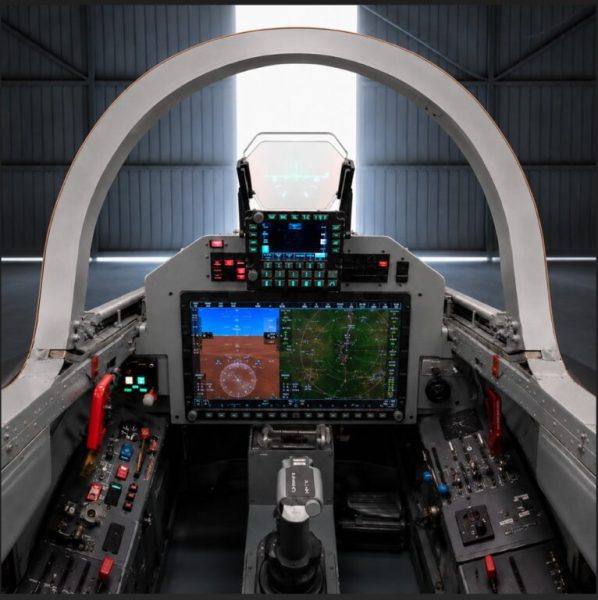
The centrepiece of that growing capability took to the air on 3 September 2026, when the company flew the demonstrator of its L-39 ACE upgrade for the first time. ACE stands for Advanced Controls Evaluator, and the aircraft incorporates modern avionics alongside a four-axis digital fly-by-wire flight control system, the culmination of a Variable Stability System (VSS) programme the company had first unveiled publicly back in 2023. In a fly-by-wire aircraft, a pilot’s control inputs are converted into digital signals sent to a flight control computer, which then commands the actuators that move the control surfaces according to a programmed set of flight control laws, rather than through the direct mechanical linkages found in a conventional aircraft. A variable stability system goes a step further, allowing those flight control laws themselves to be adjusted in flight, which is precisely what lets an ITPS instructor essentially pre-programme the aircraft’s handling characteristics for a given training sortie. It can, for example, simulate the handling qualities of an F-16, or deliberately introduce control instabilities so a student learns to recognise and manage a degraded aircraft before ever encountering one for real.
The ACE retains the L-39’s original mechanical controls in the instructor’s rear cockpit as a safety backup, while the front cockpit has been retrofitted with fresh avionics and a fully programmable sidestick. Giorgio Clementi, who has described the VSS ambition as one that once seemed almost impossible to achieve, has spearheaded the programme personally since its inception. Building on the ACE achievement and its extensive experience operating, modifying, upgrading, and extending the service life of one of the world’s largest civilian L-39 training fleets (ITPS Canada currently operates 14 L-39s), the company is now offering several modernisation options capable of transforming existing L-39 airframes into advanced-capability aircraft at what it describes as a highly competitive price point relative to buying new-build trainers. Those upgrade options are complemented by long-term sustainment solutions for both the airframe and its engine, aimed squarely at the many air forces, African ones included, that still operate ageing L-39 fleets and face a similar choice between expensive replacement and comparatively affordable modernisation.
Building an L-39 Sustainment Business, with Ukrainian Help
To support that ambition, ITPS Canada has signed collaboration agreements with the Odesa Aircraft Plant and JSC Ukrainian Defence Industry, the state concern widely known as Ukroboronprom. The partnerships strengthen the company’s links with the Ukrainian aerospace industry and support the continued development of its L-39 upgrade, overhaul, and sustainment capabilities, both for its own training fleet and for international customers.
The choice of partner is a logical one. The Odesa Aircraft Plant is among the oldest aviation enterprises in Ukraine and has spent decades repairing and modernising L-39s under state defence contracts and for foreign customers, including work that has previously reached African shores. A team from the plant, then trading as the Odessa Aviation Plant and operating under a Ukroboronprom subsidiary, spent 2019 and 2020 overhauling and modernising Ugandan Air Force L-39ZA jets at Gulu Air Base under a 2018 agreement, part of a broader effort that has kept Uganda’s L-39 fleet, sourced piecemeal from Libya, Bulgaria, and Romania over more than three decades, airworthy far longer than its original operators likely expected. ITPS Canada’s new collaboration with the same Ukrainian concern effectively gives the company access to an experienced African-facing L-39 sustainment pipeline that already exists, rather than one it would have to build from scratch.
A Fleet Built for the Next Generation of Pilots
ITPS Canada’s Africa strategy is unfolding against a backdrop of considerable growth in its own contracted military training business, with an increasing focus on NATO and its allies. The company is growing its aircraft fleet in step with that demand, and is in the process of acquiring six Leonardo M-346T Block 20 advanced jet trainers, with an option for six more, to be delivered from 2029 onward.
The order was signed in May 2026 at a ceremony at Leonardo’s Venegono facility in Italy, where Clementi, himself a test pilot, personally conducted an evaluation and acceptance flight before putting his signature to the contract alongside Leonardo Aeronautics’ Managing Director, Stefano Bortoli. “The M346 continues Italy’s illustrious track record of producing world leading jet trainer aircraft,” Clementi said at the signing. The aircraft will be based at ITPS Canada’s International Tactical Training Centre in North Bay, Ontario, where it will support the expansion of NATO and allied tactical fighter pilot training. The Block 20 standard brings a new cockpit built around a Large Area Display, designed specifically to prepare pilots bound for fifth-generation aircraft such as the F-35 Lightning II and, eventually, sixth-generation designs such as the Global Combat Air Programme’s future fighter, alongside a live, virtual, and constructive training architecture that blends real flying with simulated threats and aircraft. Globally, the M-346 has logged more than 160,000 flight hours across over 160 aircraft delivered to seven air forces to date, giving ITPS Canada a well-proven airframe rather than an unproven one for its next training generation.
These incoming aircraft will join the 35 fixed-wing, rotary-wing, and unmanned aerial platforms already in the ITPS Canada fleet, which includes three Hawker Hunter T.7As alongside the school’s L-29 and L-39 jets. It is a fleet built, quite deliberately, to take a student pilot from first jet familiarisation through fighter lead-in training and on to the kind of variable-stability, degraded-handling instruction that only an aircraft like the ACE can provide, a full pipeline increasingly on offer to African air forces that, until recently, had few options beyond sending small numbers of officers abroad and hoping the training stuck.
What This Means for African Air Forces
Taken together, the Ethiopian collaboration agreement, the deepening Nigerian relationship, the long-running South African pipeline, the NATO accreditation, and the L-39 sustainment push through Odesa Aircraft Plant point toward the same underlying shift. African air forces are increasingly being offered the same independent test, evaluation, and sustainment infrastructure that NATO air arms have relied on for decades, rather than being left to choose between full dependence on an original manufacturer or building an entire flight test capability alone. Whether that offer translates into signed contracts and aircraft on African ramps will depend on budgets, politics, and procurement timelines that ITPS Canada does not control. But the company’s direction of travel across Addis Ababa, Abuja, and Pretoria over the past eighteen months suggests it intends to be a fixture of that conversation for years to come.