The security landscape in West Africa faced another test on Sunday, December 7, 2025, when a faction of the Beninese military attempted to seize power in Cotonou. This incident marks a continuation of the volatility seen across the Sahel and coastal West Africa, yet the outcome differed notably from recent takeovers in neighbouring states. A coordinated response involving the Beninese Republican Guard, Nigerian aerial assets, and French special operations forces effectively neutralised the threat within forty-eight hours. The event serves as a case study in the evolving doctrine of French military involvement in the region, shifting from lead combat roles to specialised support and Intelligence, Surveillance, and Reconnaissance (ISR) integration.
The attempt began early Sunday morning when a group of approximately 100 uniformed men, calling themselves the Military Committee for Refoundation, seized the state television apparatus. Led by Lieutenant Colonel Pascal Tigri, the mutineers announced the removal of President Patrice Talon and the dissolution of all state institutions. The putschists utilised the element of surprise and deployed substantial resources, including armoured vehicles, to secure strategic points within the economic capital. Their primary objective was the official presidential residence, where the most intense kinetic engagements occurred.
Colonel Dieudonne Djimon Tevoedjre, head of the Republican Guard, led the immediate counter-offensive on the ground. According to Tevoedjre, his units engaged the rebel forces in a series of firefights throughout the day to prevent the collapse of the executive branch. While the mutineers possessed armoured platforms, they failed to secure wider institutional support from the broader Beninese Armed Forces. This lack of horizontal escalation allowed loyalist units to mobilise and isolate the “Military Committee for Refoundation” within specific urban pockets, specifically the Togbin camp area.
As the situation developed, the Economic Community of West African States (ECOWAS) activated regional protocols to support the Talon administration. Nigeria, acting as a regional heavyweight, deployed fighter jets to conduct precision strikes against rebel positions. These sorties targeted the Togbin camp, where the mutineers had established a defensive perimeter in a residential district. The use of Nigerian airpower provided a decisive shift in momentum; however, the complexity of conducting strikes in a densely populated urban environment necessitated specialised tactical coordination to limit collateral damage.
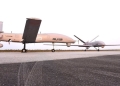
France played a critical, though carefully calibrated, role in the operation. French special forces, staged from their base in Abidjan, Côte d’Ivoire, deployed to Cotonou at the request of the Beninese government. Their involvement focused on “mopping up” operations, a term used by military analysts to describe the systematic clearing of remaining pockets of resistance after the primary combat phase. An adviser to the French presidency confirmed that the assistance included surveillance, observation, and logistical support. By providing high altitude ISR and real-time data to Beninese ground commanders, the French units allowed loyalist forces to maintain situational awareness in the confusing urban terrain of Cotonou.
French special forces, unified under the Commandement des Opérations Spéciales (COS), include elite units from the Army, Navy (Commandos Marine), and Air & Space Force, specializing in direct action, counter-terrorism, and intelligence, with key components like the Army’s BFST (Special Forces Brigade), Navy’s Hubert/Commandos Marine, and the Gendarmerie’s GIGN, providing a comprehensive special operations capability.
The technical nature of this intervention reflects a strategic pivot for Paris. Following the withdrawal of French forces from Mali, Burkina Faso, and Niger between 2020 and 2023, France has adopted a “low profile” approach. Rather than leading frontline charges, they now prioritise acting as a force multiplier for local partners. In this instance, French special forces were pre-positioned and put on high alert as soon as the initial movements were detected. The tactical synergy between Nigerian kinetic air strikes and French surveillance platforms created a multi-layered defence that the 100-man mutineer force could not overcome.
By Tuesday, December 9, the Elysee and the Beninese government confirmed that the situation was under control. The coup leaders were forced to retreat, leaving behind casualties and equipment. While at least a dozen soldiers were arrested during the clearing operations, Lieutenant Colonel Tigri reportedly fled across the border into neighbouring Togo. President Talon, whose second term is set to conclude in April 2026, addressed the nation on Sunday evening to reassure the public and international investors that the republican order remained intact.
The justification cited by the coup plotters—rising insecurity and jihadist activity in northern Benin—remains a substantial challenge for the administration. Northern Benin has experienced an increase in insurgent pressure, with major assaults in early 2025 resulting in heavy military casualties. This internal friction, combined with the transition of power to Talon’s designated successor, Finance Minister Romuald Wadagni, created a window of perceived vulnerability that the mutineers attempted to exploit.
The successful suppression of the putsch demonstrates the potential efficacy of regional security frameworks when backed by international technical expertise. The coordination between the Beninese Republican Guard, Nigerian aviation, and French special operations suggests a template for future stability operations in West Africa. While the immediate threat to the Talon administration has been neutralised, the underlying drivers of military discontent and regional extremist pressure will likely remain the primary focus for Beninese defence analysts in the lead-up to the 2026 elections.