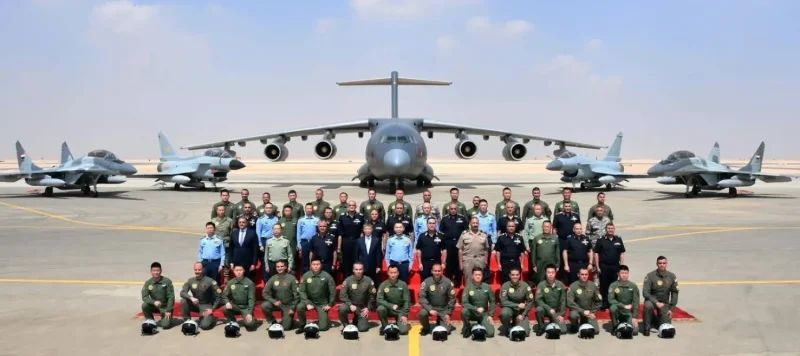
On August 23, 2026, Chinese People’s Liberation Army Air Force (PLAAF) J-16 fighters flew mock air-to-air combat against Egyptian Air Force (EAF) Rafale and MiG-29M2 jets, opening the flying phase of the “Eagles of Civilization 2026” exercise in Egypt.
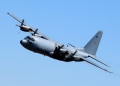
The drill is the first time a Chinese heavyweight fighter has deployed to Africa. Six or more J-16s, escorted by a YY-20A tanker, flew roughly 6,000 kilometers (3,700 miles) from western China to Egypt in about 9 hours, refueling in the air along the route. The formation landed at an Egyptian air base on August 21, according to the PLAAF, which said ground crews began unloading equipment and coordinating with Egyptian counterparts immediately after arrival.
Eagles of Civilization 2026 is the second joint exercise between the two air forces, following an initial round in April 2025 that paired lighter Chengdu J-10C fighters with Egyptian jets. This year’s package is heavier: alongside the J-16s, China sent KJ-500 airborne early warning and control aircraft, Y-20 transport planes, a Y-9 electronic warfare variant, and Z-20 utility helicopters. Egypt has fielded Rafale and upgraded MiG-29M2 fighters. The PLAAF said the exercise, which began August 22, will run into early September and includes one-on-one air combat training along with combat search and rescue and broader force coordination work.
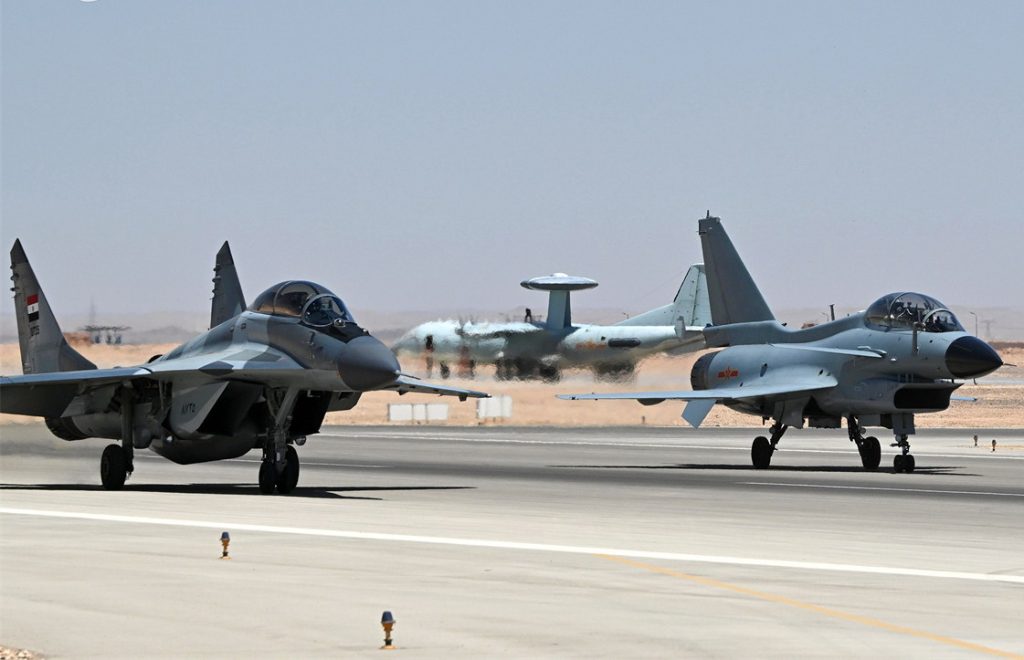
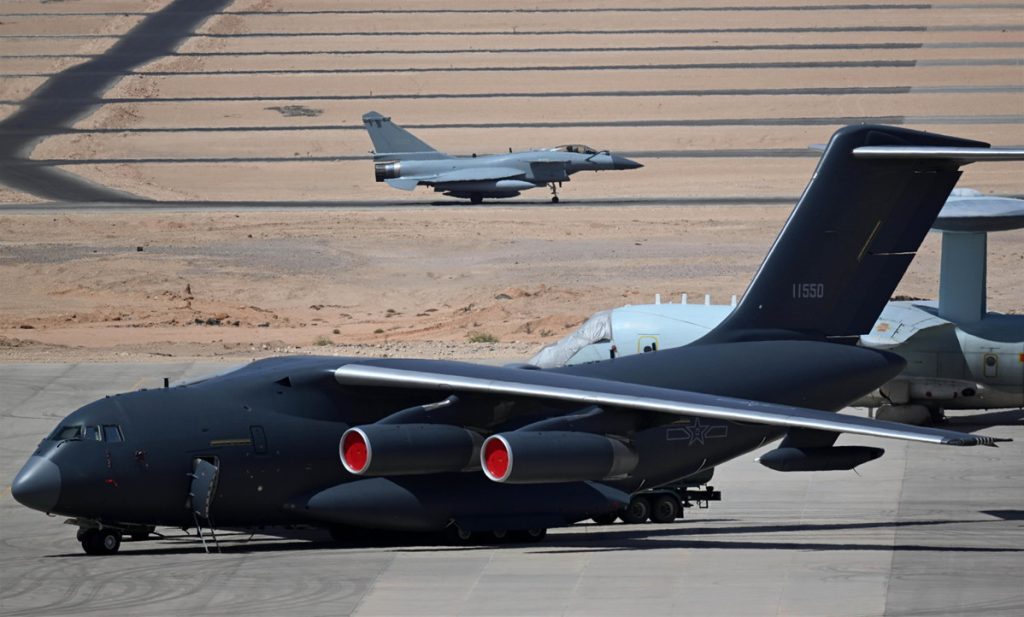
China’s own footage, released Monday and titled “Shenyang J-16 vs Dassault Rafale”, shows a J-16 backseat pilot’s view of a Rafale making a high-speed pass. Egyptian state media has also published photos of the 2 types training together. Before flights began, pilots from both sides held briefings on aircraft characteristics and agreed on airspace control, takeoff and landing procedures, and emergency protocols, the PLAAF said.
The J-16, nicknamed “Hidden Dragon”, is a twin-seat, twin-engine strike fighter built by Shenyang Aircraft Corporation. It descends from the Russian Su-30MKK airframe but carries Chinese-made WS-10B engines, an active electronically scanned array (AESA) radar, and locally developed weapons and electronic warfare systems. At a maximum takeoff weight near 35,000 kilograms (77,000 pounds), it is considerably heavier than the twin-engine Rafale and carries a larger payload across 12 hardpoints. Chinese sources put its top speed at roughly Mach 2 and its range at up to 3,000 kilometers. More than 450 J-16s are estimated to be in PLAAF service, making it the backbone of China’s fourth-generation-plus fighter fleet alongside the smaller, single-engine J-10C.
Egypt’s Rafales, in service since 2015; In 2023, it became the first export fleet of the type to pass 10,000 flying hours. The jet carries the RBE2 AESA radar, the Spectra electronic warfare suite and a mixed air-to-air and strike weapons load, and is powered by 2 Snecma M88 engines that give it less raw thrust than twin engines on heavier aircraft such as the J-16. Egypt’s MiG-29M2s, built on a Soviet-origin airframe, have been substantially modernized with a Zhuk-ME radar, an infrared search-and-track system and R-77 and R-73 missiles, giving Cairo a mixed fleet of Russian, French and, since a 2024 order, Chinese-origin combat aircraft. Egypt was the Rafale’s first export customer, ordering 24 jets in a 2015 deal worth $5.9 billion. A follow-on 2021 contract for 30 more F3R-standard aircraft resumed deliveries in October 2025 after an eight-year gap; Egypt is due to field 54 Rafales once that order is complete, the largest Rafale fleet outside France.
For China, the value of the exercise lies less in any single engagement than in proving it can move a heavy fighter fleet across continents and operate it far from home bases, officials and analysts say. The deployment tests aerial refueling, airlift, command and control and maintenance support over a corridor spanning multiple countries, a capability China has been building steadily through exercises with Pakistan and Russia. For Egypt, the drills add to a broadening set of partnerships that already include a 2024 agreement to buy Chinese J-10C fighters to replace aging F-16s, alongside its established French and Russian-origin fleets.
In May 2025, Pakistan Air Force J-10Cs, flying Chinese PL-15 missiles, clashed with Indian Air Force jets that included Rafales. An Associated Press investigation reported in July 2025 that Chinese state and social media channels ran a coordinated campaign afterward to question the Rafale’s performance, including fabricated video-game footage passed off as combat imagery. That episode has left Chinese pilots training against a Western-designed fighter of particular public interest, even though the J-16 and Rafale had not previously trained against one another, and any comparison drawn from the Egypt drills will be limited by the exercise’s rules of engagement, starting positions, and the experience of the crews involved.
Chinese crews get sustained exposure to a Western-designed fighter’s radar signature, tactics and flight characteristics, while Egyptian pilots gain rare experience against a large, AESA-equipped Flanker derivative. The PLAAF has said further joint training with Egypt is expected to continue in future years.
Footage appearing to show an Egyptian military officer sitting in a J-10S during the exercise has fuelled speculation that Cairo might be considering adding the J-10C to its air force, as there have been unconfirmed reports that Egypt is interested in acquiring the type.
The exercise was not only operationally significant but also symbolically charged. A flyover by Chinese warplanes over the pyramids was widely seen as a demonstration of deepening military ties and a signal of China’s rising influence in a region long dominated by Western powers. The drills included both aerial and ground-based operations, focusing on tactical coordination, logistics, and real-time combat scenario missions.
The timing and location of the exercise are particularly strategic. Egypt’s control of the Suez Canal, a vital artery for global trade, enhances the importance of its partnership with China. The collaboration also comes at a time when Egypt’s relationship with the United States has faced strains, and China is seeking to expand its influence through both economic and security initiatives.